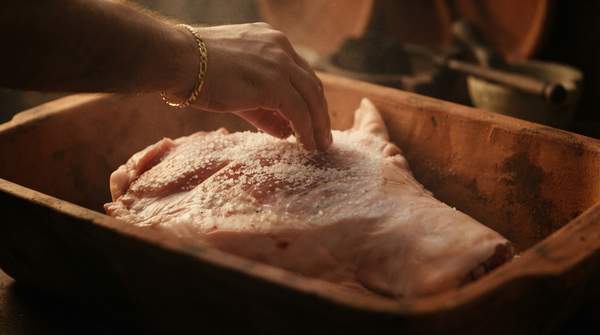
Charcuterie preservation comes down to one core idea: make meat a hostile place for microbes. Two main pathways accomplish this. Whole-muscle cures like prosciutto rely on salt and slow air-drying to strip away water that bacteria need. Ground-meat cures like salami add a fermentation step, using microbial starter cultures to acidify the meat before drying. Understand which pathway a recipe follows, and every ingredient and step starts to make sense.
The Science of Charcuterie: An Introduction to Preservation
Ask what actually makes cured meat safe, and the answer is rarely one thing. A review of traditional meat preservation techniques notes that salting, drying, curing with nitrite, and fermentation each contribute to pathogen lethality synergistically — a principle food scientists call hurdle technology. No single hurdle has to be extreme on its own; together they stack up.
Two measurements do most of the work. Water activity expresses how much water in a food is free and available for microbial growth, measured as the vapor pressure of the food relative to pure water. As water activity falls, bacteria find it harder to survive and multiply. The other is pH: acidic environments inhibit pathogens too. Whole-muscle products lean heavily on the first lever. Fermented sausages pull both.
Temperature matters throughout. As culinary references on brining, curing, and smoking explain, oxygen, moisture, and ambient temperature all accelerate microbial growth in food — with the notable exception of botulism, an anaerobic toxin that multiplies without air. Remove or reduce one of those elements, and food can be stabilized and made safe to eat. That's the whole game.