Every cocktail you mix is a controlled negotiation with water. The choice between shaking and stirring, and between large cubes, standard cubes, and crushed ice, is not a matter of ritual—it is a deliberate design decision that determines how cold your drink gets, how much water it absorbs, and how it feels in the mouth. The good news for the home mixologist is that this control follows predictable rules: shaking chills and dilutes much faster than stirring, large ice melts more slowly than small ice because of its lower surface-area-to-volume ratio, and a vigorous shake reaches a temperature and dilution plateau after roughly 12 seconds, beyond which further effort buys you almost nothing.
The Dual Role of Ice: Chilling and Dilution
Ice does two jobs at once, and they cannot be separated. As bartender Tom Macy puts it, if a drink is not chilled enough, or is under- or over-diluted, it will not taste good; the goal when mixing is to manage chilling and dilution until you reach what he calls "the sweet spot"—the point at which the drink is as cold as possible but not under or over-diluted. Hitting that spot consistently requires understanding the factors that govern how fast chilling and dilution occur, and the first of those is whether you shake or stir, since shaking chills and dilutes much faster than stirring.
This reframing matters for the home bar. Water is not the enemy of a cocktail; it is part of its architecture. A spirit-forward drink served ice-cold and undiluted tastes hot and closed; the same drink with the right amount of melt opens up aromatically and softens on the palate. The skill lies in delivering that water on purpose rather than by accident.
Scientific Principles: Surface Area and Chilling Plateaus
Two physical principles explain nearly everything about ice behavior in a mixing glass. The first is surface-area-to-volume ratio. Large cubes and spheres expose proportionally less surface to the warm liquid than small or crushed ice, so they melt more slowly. The second is the chilling plateau. According to research cited by Bols Cocktails' masterclass guide, drawing on work presented at Tales of the Cocktail, the dilution and temperature curves during a shake reach a plateau after approximately 12 seconds. Beyond that point the cocktail cannot get any colder, and further shaking only breaks down the ice structurally, producing erratic, unwanted dilution.
Because of this plateau, the initial temperature, shape, and density of your ice matter far more to the final quality of the drink than the length of time you shake or stir. Simon Difford, writing in Difford's Guide, confirms the same ceiling from practice: even a very prolonged shake adds little more dilution than a standard 12-second shake. The practical consequence is that you cannot fix a drink by shaking longer—you can only fix it by choosing better ice and a better method.
Shaking for Aeration and Rapid Chill
Shaking is the right tool when a drink needs rapid chilling, higher dilution, and—critically—aeration. As The Art of Shaking's guide on ice science summarizes, shaking introduces rapid chilling, aeration, and higher dilution, while stirring produces a silky texture, lower aeration, and controlled dilution. Neither is better; each serves a purpose. Aeration is what gives a Daiquiri its lively, frothy character and what turns egg white into a dense cap of foam, which is why citrus-based and egg-white cocktails are typically shaken.
Ice choice still matters within the shake. Bols' guide notes that large, dense cubes are preferred for shaking because they create more aeration and a better texture, while smaller, lower-quality ice melts faster and would demand shorter shake times to avoid over-dilution. Difford also cautions that shaking with a combination of cubes and crushed ice—a habit some bartenders use to force extra dilution—tends to produce inconsistent results. For the home bartender, the reliable formula is simple: fill the shaker with the largest, coldest cubes your freezer makes and shake hard for about 12 to 15 seconds.
Stirring for Clarity and Controlled Dilution
Spirit-forward cocktails—Negronis, Manhattans, Old Fashioneds, Martinis—call for the opposite treatment. These drinks are prized for their clarity and silky mouthfeel, and stirring delivers both: it chills and dilutes without whipping in air, so the drink stays visually pristine and texturally smooth. Difford's measurements give the scale of the difference: stirring contributes less dilution than shaking, roughly 20% with his style of ice, though the same principles of ice selection apply.
For stirred drinks, large ice is the standard recommendation. Bols' guide prescribes a single 2-inch clear cube or a hand-carved sphere for stirred serves, stirred with steady, deliberate technique to control dilution before the drink is strained over fresh, tempered ice. The reasoning is the surface-area rule again: large cubes expose less surface to the warm liquid and melt more slowly, giving you a wider window of control. One caution from Spirit Hub's home-bar guide cuts the other way: avoid using very large ice when a recipe needs fast chilling during mixing, because it will not melt quickly enough to properly chill the drink. Large ice buys control; small ice buys speed.
Serving Ice: Maintaining Temperature and Flavor
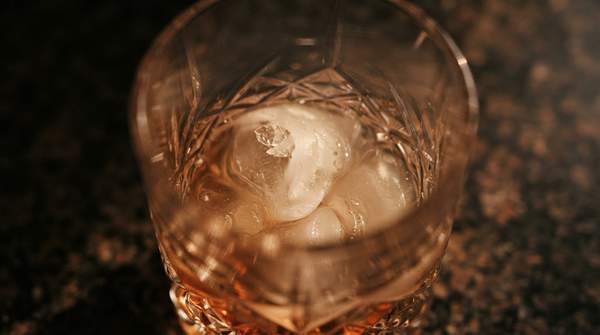
The ice you mix with and the ice you serve over are two separate decisions. Stirred and spirit-forward drinks are designed to be enjoyed slowly, and the goal, as Bols' guide frames it, is to keep the drink cold while minimizing ongoing dilution over a 15-to-20-minute period. That is why the same large-format logic applies to the glass: a single large cube or sphere in the serving vessel slows melting so the drink's flavor profile stays consistent from first sip to last.
Spirit Hub describes these large-format pieces as adding less water to the drink, allowing temperature and dilution to remain consistent for longer—ideal for anyone sipping a craft whiskey or rye on the rocks at leisure. The gradual melt is not a flaw but a feature: it adds just enough water over time for the spirit's flavors to open up. Crushed ice, by contrast, chills fast and dilutes fast, which suits drinks built for immediate, slushy consumption but not for slow sipping.
Cocktail Ice & Technique Decision Framework
Use this matrix to translate your cocktail's goal into a concrete combination of technique and ice. The dilution targets come from batching guidance published by cocktailsandbars.com, which suggests roughly 40–45% dilution for stirred, spirit-forward drinks, around 30% for shaken drinks, and around 20% for sparkling cocktails—ranges that reflect personal preference and setup as much as fixed rules.
| Cocktail Goal | Technique | Mixing Ice | Serving Ice | Typical Dilution | Key Effect |
|---|---|---|---|---|---|
| Rapid chilling & aeration (citrus or egg-white drinks, e.g., Daiquiri) | Shake vigorously, ~12–15 seconds | Large, dense cubes | Strained, no ice (or fine ice for julep-style drinks) | ~30% | Frothy, airy texture; fast chill; further shaking adds little beyond the plateau |
| Controlled chilling & silky texture (spirit-forward drinks, e.g., Negroni, Martini) | Stir steadily and deliberately | Large cubes | Single large cube or sphere | ~40–45% | Clarity, minimal aeration, slow predictable melt |
| Slow sipping & minimal dilution (whiskey on the rocks) | None—built in the glass | Not applicable | One large cube or rock | Gradual, ongoing | Temperature and flavor stay consistent over 15–20 minutes |
To read the matrix, start with the goal, not the recipe: if the drink contains citrus or egg and wants texture, shake it with big cubes and stop around 12 seconds; if it is all spirit and wants clarity, stir it over large ice and serve it over more of the same; if it is meant to sit in the glass for twenty minutes, the serving ice is the whole decision. Note the boundary cases the matrix encodes: very large ice will not chill a stirred drink quickly enough on its own, so stir with intent rather than waiting on melt, and prolonged shaking past the plateau only degrades the ice.
Mastering Your Mix: Intentional Ice Use for Better Cocktails
Home mixologists should intentionally select ice type and mixing technique based on the desired outcome—aeration, texture, dilution rate, and temperature—rather than defaulting to one-size-fits-all habits. This guide assumes standard freezer ice rather than specialized equipment, and it concerns dilution and temperature rather than advanced techniques like fat-washing or infusions. The Art of Shaking offers a simple way to internalize the principle: make two identical Daiquiris, shake one for ten seconds and the other for eighteen, and taste them side by side—you will feel dilution in action in the texture, sweetness, and alcohol heat.
The measurable indicator of success is the consistent achievement of your desired temperature, dilution, and texture in prepared cocktails, as confirmed by taste and visual inspection. If a shaken Daiquiri is frothy and properly cold at 12 seconds, and a stirred Negroni stays balanced to the last sip over a single large cube, your ice and technique choices are doing their jobs.
Sources
- Ice: Chilling & Dilution — Tom Macy Cocktails
- The masterclass guide to cocktail ice: Science, application, and execu — Bols Cocktails
- Some cocktails benefit from added water — Diffordsguide
- The Hidden Science of Ice and Dilution That Transforms Good Cocktails — The Art Of Shaking
- How to Properly Use Ice in Cocktails — Spirit Hub
- How to Calculate Dilution for Pre-Batched Cocktails — Cocktailsandbars