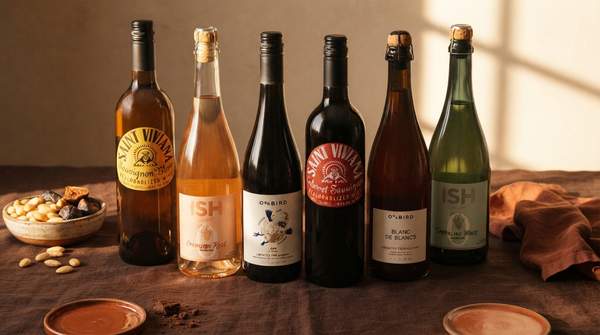
Non-alcoholic spirits are made through three distinct scientific pathways: building flavor directly into a zero-proof base, using alcohol as a temporary solvent before removing it, or dealcoholizing a fully fermented beverage. Each route shapes the final product's flavor, aroma and mouthfeel differently, and understanding which pathway a bottle used is the most reliable way to predict what it will taste like before you buy it.
The Rise of Non-Alcoholic Spirits: A Scientific Approach
The category sounds like a contradiction: a spirit is defined by its alcohol content, so what remains when the ethanol is gone? As the retailer Better Rhodes frames it, the answer is intention. A good non-alcoholic spirit is designed to replicate the structure, aroma and mouthfeel of its alcoholic cousin, keeping the complexity, layered flavor profile and satisfying adult "bite" rather than simply stripping alcohol away. That design problem is genuinely chemical. Alcohol, as the producer ANON Drinks explains, affects how aromas are released, how flavors are carried across the palate, the sensation of warmth, mouthfeel and perceived intensity. Remove it, and every one of those functions must be rebuilt from other ingredients, which is why production method matters so much to what ends up in the glass.
Pathway 1: Building Flavor from a Zero-Proof Base
The first pathway never introduces alcohol at all. Botanicals, fruits or spices are infused into a non-alcoholic liquid, often water or tea, or into a previously distilled zero-proof base. Writing for AMLI Residential, Colleen Ford describes two main extraction techniques: vapor infusion, where water is heated into a vapor that passes through natural ingredients, picking up flavor before being cooled and condensed back into a liquid, and maceration, where ingredients steep directly in the liquid. The science here is selective extraction. Different compounds behave differently, and temperature, time, pressure and the liquid used all affect the result, as ANON Drinks notes.
Some ingredients yield bright, volatile aromas while others contribute deeper, more persistent flavors, so a successful recipe must balance them without letting one dominate. Because no alcohol is present to dissolve flavor compounds, producers must develop alternative routes to depth and complexity.
Pathway 2: Alcohol as a Temporary Solvent for Extraction
The second pathway borrows alcohol's power as a solvent and then takes it away. Botanicals such as juniper, cardamom or native herbs are steeped and distilled in the traditional manner to capture their flavor and aroma, and the alcohol is either never introduced in the finished product or carefully removed afterward, as the LO/NO Club's Zara Meekins describes. The advantage is extraction fidelity: alcohol is an effective solvent for many flavor compounds that water alone struggles to capture. The challenge is removal without loss.
Vacuum distillation is one of the most popular dealcoholization techniques, particularly in the wine industry, according to Jacopo Mazzeo writing in SevenFifty Daily, and it operates at lower temperatures precisely so that delicate volatile aromas survive the separation. A webinar from the International Bulk Wine & Spirits Show frames the same trade-off as the field's central technical problem: removing alcohol while preserving the sensory experience that defines great spirits.
Pathway 3: Dealcoholization of Fermented Bases
The third pathway starts from a fully alcoholic, traditionally fermented product and removes the ethanol at the end. Mazzeo reports that beverage manufacturers employ two primary methods for alcohol removal, reverse osmosis and vacuum distillation, alongside a growing range of proprietary technologies. The scientific difficulty is separation: alcohol and water carry many of the same desirable volatile compounds, so the process must pull out ethanol without stripping the aromas and flavors that make the drink worth keeping.
Better Rhodes describes one whiskey-style application in which a base mash is treated under precisely controlled temperature and pressure to mimic barrel aging, then re-distilled to remove the alcohol while leaving behind essential oils and tannins that reproduce whiskey's mouthfeel and warmth. One caveat belongs here: the clearest published evidence on reverse osmosis and vacuum distillation concerns beer and wine, so its application to spirits specifically should be read as an extension of the same family of techniques rather than a separately documented spirits process.
Comparative Framework of Non-Alcoholic Spirit Production Methods
| Pathway | Starting Material | Core Scientific Principle | Impact on Flavor/Aroma | Impact on Mouthfeel |
|---|---|---|---|---|
| Build-up from zero (maceration/infusion) | Botanicals, fruits or spices infused into water, tea or a pre-distilled zero-proof liquid | Extraction via maceration or vapor infusion; temperature, time, pressure and liquid choice govern which compounds dissolve | Bright, volatile aromas possible, but depth must be built without alcohol's solvent power | Body must be added through ingredients such as tannins or glycerin |
| Alcohol extraction, then removal | Botanicals steeped in an alcoholic solution, then distilled | Alcohol acts as a temporary solvent; vacuum distillation removes it at lower temperatures to protect delicate aromas | Closer to traditional distillate character; aroma retention depends on gentle removal | Essential oils and tannins can carry over, supporting warmth and weight |
| Dealcoholization of fermented bases | A fully fermented alcoholic beverage | Reverse osmosis or vacuum distillation separates ethanol from the base while minimizing flavor loss | Complexity from fermentation survives only insofar as the separation preserves volatile compounds | Residual tannins and oils can mimic aged-spirit texture |
Read down the first column and the logic of the category becomes clear: the further down the table a product starts, the more of the traditional process it preserves, and the more its quality depends on the precision of the removal step rather than on recipe design.
The Science of Sensory Replication: Mimicking Alcohol's Effects
Whichever pathway is used, every producer faces the same finishing problem: rebuilding what ethanol did. ANON Drinks lists the toolkit explicitly. Bitterness adds structure, acidity creates freshness, sweetness softens sharper flavors, botanical extracts introduce aroma and depth, spices create warmth, and carbonation adds energy and lift. Bel Nada describes the same work at the compound level: terpenes from citrus peels for bright, zesty notes, phenolic compounds from herbs for complexity and slight bitterness, essential oils for aromatic intensity, and natural acids for balance and mouthfeel.
Because ethanol normally provides a unifying base, alcohol-free versions must achieve harmony through careful layering, sometimes by creating separate distillates for different botanical groups and blending them in precise ratios. The LO/NO Club's version of the recipe is green tea for tannin, citrus for acidity, and hints of pepper or cacao for bite. This balance matters most in mixed drinks, since a spirit that tastes good neat may behave differently with tonic, soda or fruit juice.
Making an Informed Choice: Aligning Production with Preference
Consumers can select non-alcoholic spirits by understanding how the three production pathways influence the final flavor, aroma and mouthfeel, matching products to the sensory experience they want. The practical test is simple: read the product description or ingredient list for the pathway's fingerprints. A botanical infusion into water or tea points toward the brighter, fresher end of the spectrum, while language about distillation, re-distillation or dealcoholized bases signals a product built for complexity, warmth and aged-style nuance. Ingredients like green tea tannins, pepper or cacao tell you the producer engineered bite and body deliberately. If a label's method is not described at all, that absence is itself a signal worth weighing before you buy.
Sources
- \r\n \n The Science Behind Non-Alcoholic Spirits: How ANON Drinks Are Made\n \r\n — Anondrinks
- The Zero-Proof Secret: How to Distill Non-Alcoholic Spirits That Taste Real — Better Rhodes
- How Non-Alcoholic Spirits Are Made — AMLI Residential
- The Science Behind Non-Alcoholic Spirits: How Zero Proof Still Packs F — LO/NO Club
- The Science Behind Non-Alcoholic Beer and Wine Production — SevenFifty Daily
- Beyond the Buzz: How to Create Non-Alcoholic Spirits That Actually Deliver — International Bulk Wine & Spirits Show San Francisco
- The Science of Flavor: How Alcohol-Free Spirits Are Made — Bel Nada