If you want to move beyond ordering "ramen" and start ordering a style, three regional bowls make the best starting point: Sapporo's hearty miso ramen from Hokkaido, Kitakata's light soy-sauce ramen from Fukushima, and Onomichi's seafood-tinged soy ramen from Hiroshima Prefecture. Each is defined by a distinctive combination of broth, noodles, and toppings, and once you can name those three components, choosing a bowl becomes a matter of matching the style to your own taste.
Regional Ramen: A Culinary Journey Through Japan
Ramen is not one dish but a family of regional traditions. Most bowls are built on one of four foundational broth categories. Shoyu ramen is seasoned with soy sauce; shio with salt; miso with fermented soybean paste; and tonkotsu is made by boiling pork bones until they dissolve into a cloudy white broth, thick and creamy, often flavored with chicken broth and pork fat, and particularly popular around Kyushu, as the Japan Guide explains.
Those four bases are then interpreted locally. Hokkaido, for instance, has three popular regional ramen types that are well-known throughout Japan, according to Kayoko Hirata Paku's ramen guide at Just One Cookbook, and Sapporo's version comes in soy sauce, salt, or miso flavors, with miso the most popular. The regional styles below show how far a single bowl can travel from the next: a rich, lard-heavy miso soup built for northern winters, a delicate soy broth paired with unusually wide noodles, and a clear soy-dashi soup flavored by fish from the Seto Inland Sea.
Sapporo Miso Ramen: Hokkaido's Hearty Bowl
Sapporo, the capital of Japan's northernmost prefecture, is known as the birthplace of miso-style ramen, and the city's enthusiasm is visible in its geography: it has not one but two ramen "alleys," Ganso Ramen Yokocho and Shin Ramen Yokocho, according to Gurunavi's regional ramen guide. The style answers a climatic need. Japan Guide notes that miso ramen originated in Hokkaido, where the long cold winters spurred the need for a heartier type of ramen soup, though it has since spread across the country.
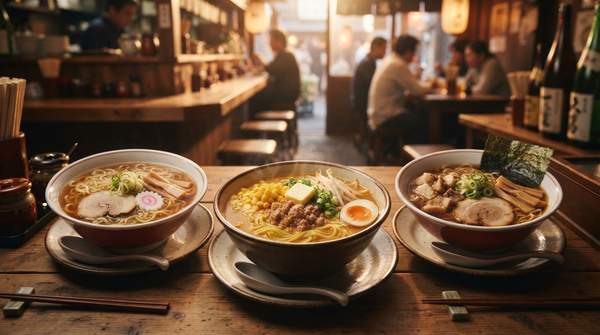
The construction is distinctive: fragrant soybean paste is sautéed together with ginger and garlic and mixed with pork broth for a hearty bowl that hits the spot on even the coldest winter days. Just One Cookbook adds that the rich, bold-tasting miso soup contains a lot of lard, which keeps it from getting cold — a practical feature in a snowy city. The noodles are curly and medium-thick, and the toppings lean sweet and rich: sliced meat, vegetables, and notably a pile of sweet corn and a big slab of butter, alongside roasted chashu pork, bamboo shoots, and bean sprouts. If your ideal bowl is warming, fatty, and assertively savory, this is the style to try first.
Kitakata Ramen: Fukushima's Flat Noodle Delight
Kitakata ramen, which originated in Kitakata City in western Fukushima, is defined by its noodles before anything else. The Japan National Tourism Organization describes them as "hirauchi jukusei taka suimen" — matured flat noodles with lots of water — four millimeters wide, flattened and curled. Because the noodles are matured for a lengthy period, their texture is notably firm. Rakuten Travel's guide to Japan's regional ramen varieties characterizes them as thick, flat, and wavy, which gives the bowl a chew that thinner noodles cannot match.
The soup is the opposite of Sapporo's: usually soy sauce-based and light, a combination that pairs with the substantial noodles rather than competing with them. While Sapporo is best known for miso, JNTO notes that some Sapporo restaurants also serve salt and soy sauce-based broths — a reminder that regional labels describe a dominant style, not a strict rule. Kitakata's typical toppings are char siu pork, bamboo shoots, and a sprinkle of green onions, keeping the bowl lean and savory. Rakuten Travel also observes that Kitakata, despite its small size, boasts an overwhelming concentration of ramen shops, which makes it a genuine destination for anyone who prefers a cleaner, soy-forward bowl with an exceptional noodle bite.
Onomichi Ramen: Seto Inland Sea's Seafood-Infused Soy
Onomichi ramen, from Onomichi-shi in Hiroshima Prefecture, is a coastal interpretation of soy-sauce ramen. Its main feature, according to JNTO, is a clear soy sauce base made of dashi prepared with chicken bones and small fish from the Seto Inland Sea, usually topped with fatback. The result, as a Japanese government online feature puts it, is a rich soy sauce flavor and a mellow seafood taste — a nostalgic flavor that makes you want to keep sipping the broth.
The noodles are chosen to serve that broth: thin and wide, because they do a better job of soaking up the soup. The standard toppings are chashu (barbecued pork), bamboo shoots, and green onions. The government feature adds a practical note for travelers: broth and noodle styles vary by restaurant depending on each shop's individuality, and since portions are smaller than other regional ramen, you can compare multiple bowls from different restaurants in one visit. Onomichi ramen is currently best known in the Chugoku region and has become recognized nationwide, so it is increasingly findable beyond its home city.
Comparing Japan's Regional Ramen Styles
The table below isolates the defining components of each style side by side, so you can match a bowl to your preferences for broth richness, noodle texture, and topping character.
| Region/Style | Broth Characteristics | Noodle Type | Common Toppings |
|---|---|---|---|
| Sapporo Miso Ramen (Hokkaido) | Hearty miso-based pork broth; sautéed soybean paste with ginger and garlic; rich and bold, with lard that keeps it hot — built for cold winters | Curly, medium-thick | Roasted chashu pork, bamboo shoots, bean sprouts, sweet corn, butter, sliced meat, vegetables |
| Kitakata Ramen (Fukushima) | Light, soy sauce-based soup | Thick, flat, wavy — four millimeters wide, matured for a firm texture | Char siu pork, bamboo shoots, green onions |
| Onomichi Ramen (Hiroshima Prefecture) | Clear soy sauce base; dashi of chicken bones and small Seto Inland Sea fish; rich soy flavor with mellow seafood taste, usually topped with fatback | Thin and wide, chosen to soak up the soup | Chashu (barbecued pork), bamboo shoots, green onions |
Read across the rows and the trade-offs become clear. If you want a hearty miso broth with thick, curly noodles and sweet, rich toppings like corn and butter, Sapporo is your bowl. If you prefer a lighter soy broth carried by unusually wide, firm, flat noodles, Kitakata fits. If a clear, seafood-tinged soy soup with thin, wide noodles appeals, Onomichi is the match. All three share chashu pork, bamboo shoots, and green onions in some form, which makes the broth and noodle differences the real deciding factors.
Choosing Your Next Ramen Adventure
Based on the distinct characteristics of broth, noodles, and toppings, readers can confidently select a regional ramen style that aligns with their personal taste preferences for their next culinary experience or travel plan. The decision comes down to three questions: do you want rich or light, thick or thin, hearty or delicate? Sapporo answers the first of each pair; Kitakata and Onomichi answer the second, differing mainly in noodle width and whether the soy broth carries a seafood note.
The measurable indicator of success is a reader's ability to articulate the specific differences between Sapporo Miso, Kitakata, and Onomichi ramen, and express a preference for one based on its described components. Test yourself before your next order or trip: name the broth base, the noodle shape, and one signature topping for each style. If you can do that — miso with curly noodles and butter, light soy with flat matured noodles, seafood-soy with thin wide noodles — you are ready to order by style rather than by default, and to know exactly which bowl to seek out first.
Sources
- Ramen — JAPAN GUIDE
- Ramen Guide: Broths, Noodles & Toppings — Just One Cookbook
- 11 Types of Japanese Regional Ramen for the Epicurious Traveler — Gurunavi
- Regional Japanese Ramen and Where to Find Them — Japan National Tourism Organization (JNTO)
- A Guide to Japan’s Regional Ramen Varieties — Rakuten Travel
- GOV ONLINE