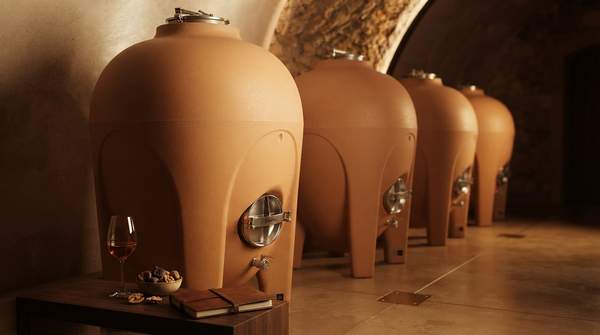
The three most important vessels winemakers reach for when they want to age wine without the flavor of oak—stainless steel, concrete, and clay amphora—differ from one another mainly in a single variable: how much oxygen they let reach the wine. Stainless steel is airtight and flavor-neutral, preserving crisp fruit and acidity. Concrete and clay are porous, admitting a gentle trickle of oxygen that softens texture without adding any flavor of their own. Understanding that spectrum, from reductive to subtly oxidative, is the key to reading winemaking styles off a label.
Introduction: Beyond the Barrel
Oak dominates the popular imagination of wine aging, but it is only one option in a cellar whose range runs from thoroughly modern tanks to vessels older than oak barrel-making itself. As Martine's Wines observed in a 2023 overview, the choice among "the contemporary precision of stainless steel" and "the ancient allure of clay amphorae" reflects the winemaker's philosophy and the intended style of the finished wine. Over the past decade or so, winemakers in both Old and New World regions have increasingly turned to concrete, while clay amphorae—used for fermenting and maturing wine since antiquity—have enjoyed a modern revival. What unites these alternatives is a shared goal: shaping texture, structure, and aromatic development through oxygen and temperature control rather than through the toasty, vanilla-tinged flavors that new oak contributes.
Stainless Steel: Precision and Purity
Stainless steel is the most inert of the three. The material is non-reactive and completely impenetrable to oxygen, so wine stored in a sealed tank sits in a reductive environment, largely cut off from air. The practical result is preservation: the wine undergoes minimal oxidation, which helps retain its crispness and vibrancy, and nothing from the vessel itself flavors the contents. This is why stainless steel has been the chosen vessel for unoaked wines for the past several decades, and why it is particularly favored for aromatic grape varieties, which keep their varietal character untainted by external elements.
Its one material trade-off is thermal. Because stainless steel has no inherent insulation, it typically requires cooling coils for temperature control, which, as wine writer Benjamin Lewin MW has noted, may produce a more abrupt temperature gradient within the liquid than insulated vessels do. Whether that gradient matters in the finished wine is less certain—Lewin also notes that claims of electrostatic interactions influencing wine in steel have never been demonstrated. What is well established is the sensory signature: freshness, bright fruit, and retained acidity.
Concrete: Structure and Subtle Exchange
Concrete occupies a middle ground that winemakers describe as a happy medium between stainless steel and oak. Its porosity is similar to oak's in allowing oxygen to interact with the wine, yet unlike oak it imparts no flavors of its own. That combination lets a winemaker preserve varietal purity while oxygen and wine "dance together," in the words of one industry writer, softening acidity and tannins over time. Good Harbor, writing about the history of concrete tanks, describes the material's porous nature as fostering "a gentle exchange between wine and its environment" and "a slow and nuanced aging process."
Concrete also insulates naturally, evening out temperature swings in a way bare steel cannot. The vessel's most distinctive modern form is the egg, whose curved interior keeps grape solids in subtle motion through a consistent gravitational flow—useful when concrete is used for fermentation as well as aging. Winemakers using concrete, Kathleen Willcox reported in SOMM TV Magazine, credit it with softening texture and subtly changing a wine's structure without adding flavor, though concrete and clay transfer a little less oxygen than wooden barrels do. One caveat belongs in the ledger: Lewin, for one, doubts that oxygen transmission through concrete is a significant effect, so the size of its contribution remains debated among practitioners.
Clay Amphorae: Ancient Tradition, Modern Revival
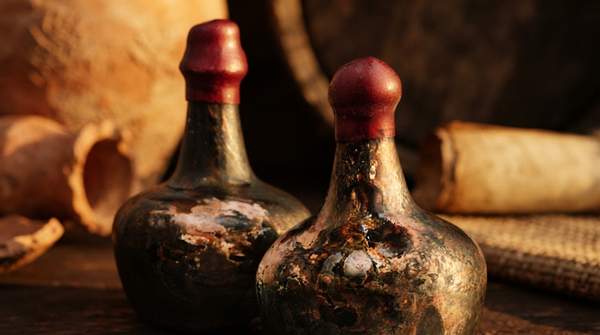
Clay is the oldest vessel in this comparison and, in practice, behaves much like concrete. Amphora and other clay containers are porous; that porosity introduces oxygen to the wine, but unlike oak and other wooden barrels, the vessels introduce no flavors. Winemakers credit amphorae with letting a wine's distinct character emerge—"just the vineyard in a glass," as Six Eighty Cellars, a Finger Lakes producer working with the technique, puts it—while the same micro-oxygenation that softens concrete-aged wines provides structural benefits here as well.
Benjamin Lewin MW places clay "somewhere in between" vat aging and oak on the spectrum of aging vessels: more oxygen-permeable than a sealed stainless tank, less so than a small wooden barrel. Amphorae can be used to ferment and/or age wine, and their revival among both natural-wine producers and mainstream cellars reflects the same appeal concrete holds—textural and structural development without flavor imprint.
Comparative Overview of Non-Oak Wine Aging Vessels
Setting the three materials side by side clarifies why a winemaker picks one over another. Each row below follows from the same evidence base: steel's airtight neutrality, concrete's insulating porosity, and clay's comparable but more oxygen-permeable structure.
| Vessel Type | Material Properties | Oxygen Interaction | Flavor Imparted | Effect on Texture | Typical Use |
|---|---|---|---|---|---|
| Stainless steel | Non-reactive; no inherent insulation, so cooling coils are needed for temperature control | Airtight; fully reductive environment preventing oxygen ingress | None; preserves primary fruit and varietal character | Crisp, fresh, vibrant, with retained acidity | Unoaked wines, especially aromatic varieties, over recent decades |
| Concrete (incl. eggs) | Porous; natural thermal insulation; egg shape keeps solids in subtle motion | Gentle micro-oxygenation—though some writers, including Benjamin Lewin MW, question how significant it is | None; lets the wine's own flavors emerge | Softer texture; acidity and tannins rounded; structure subtly changed | Large tanks most common; eggs gaining popularity for fermenting and aging |
| Clay / amphora | Porous clay; the oldest of the three materials | Oxygen introduced through porosity; sits between vat aging and oak on the oxygen spectrum | None; lets the vineyard character speak | Complexity and structural development via micro-oxygenation | Fermenting and/or maturing; strong revival among natural and mainstream producers |
The comparison reveals the essential pattern: all three are flavor-neutral compared with oak, but they are not impact-neutral. Their differing porosity and thermal behavior produce distinct textures and aromatic profiles even when no vessel flavor reaches the glass.
The Oxygen Spectrum: From Reductive to Micro-Oxidative
Plotting the vessels along a single axis of oxygen exposure explains most of what matters. At one extreme sits stainless steel: completely impenetrable, reductive, a preservation chamber. New oak marks the other extreme—porous and flavor-active at once. Concrete and clay occupy the middle ground, porous enough to let oxygen interact with the wine but neutral in flavor, softening acidity and tannins as a result. Lewin frames the clearest difference as that between vat aging—steel or concrete—and oak, with clay amphorae landing in between.
Scientific work on vessel materials backs up the underlying premise: a study of oxygen transmission in enological containers found that all the materials examined have some permeability to oxygen, at levels suitable for wine containers, and noted that stainless steel's tightness can push toward reduction, a defect by excess rather than by insufficiency. The same study cautions that the real oxygen rate a tank delivers must be measured under realistic liquid-contact conditions—a reminder that "porous" is a relative term, not a fixed number, and that barrel-to-barrel, tank-to-tank variation exists.
Choosing the Vessel: Winemaker's Philosophy and Desired Style
Because each material manages oxygen and temperature differently without flavoring the wine, the vessel decision is effectively a decision about texture and freshness. A winemaker chasing laser-sharp varietal aromatics and bright acidity chooses steel's sealed, reductive environment. One who wants a softer palate and gentler development while keeping flavors untouched turns to concrete or clay, accepting a slower, oxygen-mediated maturation. That the trend toward concrete has taken hold in both Old and New World cellars, despite the tanks' upfront cost and bulk, shows winemakers judge the resulting wine worth the trade.
Making the Choice: A Winemaker's Deliberate Decision
Winemakers should select aging vessels based on their desired wine style, specifically considering the level of oxygen interaction, thermal stability, and textural impact each material offers, while aiming to preserve or enhance the wine's inherent characteristics without imparting external flavors. For the reader, the payoff is practical: the tasting notes and sensory profile of a wine, particularly its freshness, fruit purity, textural richness, and presence of earthy or mineral notes, will reflect the influence of its aging vessel. A glass that tastes crystalline and vivid points toward steel; one that feels rounder, softer, and more intricate without a trace of toast points toward concrete or clay—two ancient-and-modern materials that let oxygen, not the vessel, do the talking.
Sources
- Unveiling the Influence of Aging Vessels on Wine — Martines Wines
- History is written by the victors: Winemaking history and revisionism — World Of Fine Wine
- Concrete Wine Tanks Explained — Good Harbor