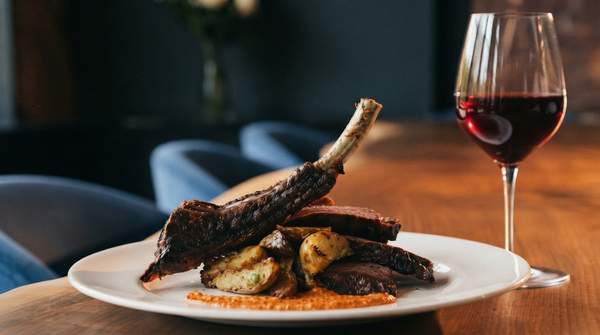
Successful food and wine pairing is not a matter of folklore or memorized rules like "red with meat." It is, at its core, a predictable sensory science: when wine meets food in the mouth, the structural components of each—fat, acid, sweetness, salt, bitterness, and heat in the dish; tannin, acidity, sweetness, and body in the glass—either suppress or enhance one another's sensations. A University of Arkansas food science review of pairing research notes that these combinations "can result in attribute suppression or enhancement," and that the practical question is simply whether the resulting change is pleasant.
That means you can analyze any dish and any wine component by component, and forecast the outcome before the first bite. This article explains the vocabulary of those components, the two philosophies that govern their interaction, and a decision framework you can apply at any table.
The Foundation of Flavor: Understanding Food and Wine Components
Every pairing decision rests on a handful of structural elements. On the food side, the ones that matter most are fat and richness, acidity, sweetness, salt, bitterness, and chili heat. On the wine side, the key players are tannin, acidity, residual sugar, and body—which is largely a product of alcohol and tannin working together. As WineMaker Magazine explains, tannins produce the astringent "grip" or drying sensation carried by many red wines, and "in combination, tannins and ethyl alcohol are the primary contributors to overall 'body' in a wine."
Virginia Tech's enology program, which maintains one of the most systematic treatments of the subject, adds that tannins do double duty: they create a textural change—the dry-mouth astringency—and a component change, bitterness. Alcohol, meanwhile, contributes a warmth or hotness sensation, and high-alcohol wines give "the impression of sweetness," which is why full-bodied wines tend to read as sweeter and richer than their low-alcohol counterparts. A culinary training text from Nicolet College compresses the food side into useful shorthand: fat is "richness in food that affects how wine is perceived," acidity is "tartness in wine that cuts through richness and refreshes the palate," and residual sugar is "sweetness in wine that can balance heat, salt, and acidity in food."
Crucially, these components interact chemically, not just metaphorically. Researchers at the University of Bordeaux, studying why wine and cheese go so well together, used biophysical methods and sensory analysis to observe how lipids behave in emulsion when mixed with catechin, a primary component of grape tannins—direct evidence that the fat-tannin relationship is a real molecular event, not just a culinary convention. The Arkansas review likewise cites research showing that "fat and protein rich foods can reduce wine astringency and bitterness, enhancing consumer liking for wine."
Two Paths to Harmony: Complementary and Contrasting Pairings
Once you can name the components, every successful pairing follows one of two logics. The Nicolet College text defines them precisely: a complementary pairing matches similar flavors and intensities in wine and food to create harmony, while a contrasting pairinging uses opposite characteristics to create balance through opposition. Some writers call the first approach "congruent" pairing, because the flavors echo each other.
Complementary pairing works because matching like with like prevents one side from being overwhelmed. Virginia Tech's guidance is explicit that "acid wines and foods can go well—similarity reduces sourness," citing a Beaujolais-style wine with salad as an example. The same logic applies to sweetness: foods with some sweetness are best paired with wines of similar sweetness, whether that sweetness comes from fruit, honey, almonds, or certain herbs. When the wine matches or slightly exceeds the food's intensity, neither element flattens the other.
Contrasting pairing works by using one component to cancel or soften another. The classic case is acid against fat: an acidic wine cuts through a rich, creamy dish and refreshes the palate, preventing the fat from overwhelming it. The mirror-image contrast is tannin against fat—fats and oils in food "tend to neutralize the astringency and harshness of red wines, particularly young red wines," which is why Virginia Tech's program notes that tannic red wines match best with creamy, rich foods. The same source observes that acid wines can also go well with salty foods, as with Muscadet and oysters.
Choosing between the two strategies is usually a matter of which component dominates the dish: if the dish's dominant element is pleasant and you want to preserve it, complement it; if it is heavy or intense and you want relief from it, contrast it.
The Food & Wine Pairing Decision Framework
The framework below turns those principles into a repeatable diagnostic. Start by identifying the dominant structural component of the dish—not every flavor, but the one that will dominate the palate. Then find that component in the first column, and read across to see which wine characteristic will complement or contrast with it, and what outcome to predict. A pairing that lands on a harmony or balance outcome is likely to succeed; one that triggers enhancement of an unpleasant sensation is likely to clash.
| Food Component | Wine Component | Interaction | Predicted Outcome |
|---|---|---|---|
| Fat / richness | Tannin | Contrasting | Harmony: fat and protein soften the wine's astringency and bitterness, per research cited by the University of Arkansas review |
| Fat / richness | Acidity | Contrasting | Balance: acid cuts through richness and refreshes the palate |
| Acidity | Equal or greater acidity | Complementary | Harmony: similarity reduces sourness; the wine must be as acidic as the food or it will taste flabby |
| Sweetness | Similar or greater sweetness | Complementary | Harmony; a dry wine beside sweet food will taste thin, sour, more astringent, and oaky |
| Salt | Acidity or slight sweetness | Contrasting | Balance: acidity complements salty flavors; slight sweetness tones down perceived saltiness |
| Bitterness | Fruitiness or slight sweetness (or a tannic wine with its own bitter component) | Contrasting or complementary | Balance: fruity or slightly sweet wine offsets bitterness; matching bitter with bitter can also succeed |
| Spice / heat | Low alcohol with residual sweetness | Contrasting | Balance: sweetness mitigates heat, while high alcohol would intensify it |
Two qualifications embedded in the evidence deserve emphasis. First, the acid-with-acid rule has a direction: the wine should be as acidic as or more acidic than the food, or the wine will fall flat. Second, sweetness in wine is a broader tool than dessert pairing suggests—Virginia Tech notes that slightly sweet wines can tone down the perception of astringency, bitterness, tartness from acidic vegetables, and saltiness, making them quietly versatile problem-solvers.
Navigating Tricky Pairings: Bitterness and Spice
Bitterness and heat are the two components most likely to sabotage a pairing, and for understandable sensory reasons. Bitter food compounds interact with wine's own bitter and astringent elements: the Arkansas review warns that increased bitterness or harsh acidity in a wine is unlikely to be favorable in a pairing, and that bitter foods can enhance those same attributes in tannic wines. The San Francisco Wine School, in a guide by Kristin Campbell, offers two escape routes: match bitter foods with tannic reds that carry their own bitter component—the complementary route—or balance the food's bitterness with a very fruity or slightly sweet wine. What you cannot do is pair bitter food with a wine whose bitterness will stack on top of it.
Spice and heat present the opposite trap: alcohol. Because alcohol produces a warm, hot texture sensation, high-alcohol wines intensify the burn of spicy dishes rather than relieving it. The framework's answer is to reach for lower-alcohol wines with residual sweetness, which mitigate the heat. Virginia Tech's guidance reinforces the mechanism: alcohol provides a hotness or warmth sensation, so the higher the alcohol, the more fuel on the fire. Sweetness, by contrast, is the component the culinary literature consistently identifies as the antidote to heat, salt, and excess acidity alike.
One further caution from the research world: the Arkansas review notes a "lack of a systematic approach in sample selection" in some pairing studies—meaning the underlying science, while directionally solid, is still maturing. The framework's rules describe reliable sensory tendencies, not immutable laws, and individual perception varies.
Elevate Your Dining: Confident Pairing Decisions
By understanding and applying the principles of complementary and contrasting interactions between food and wine components, you can confidently predict and create harmonious pairings. The practical discipline is simple: name the dish's dominant component, choose a wine characteristic that either echoes it or offsets it, and check the predicted outcome before pouring. The measurable indicator of success is a noticeable improvement in the perceived balance and enjoyment of the food and wine when paired using the framework's principles—so test it deliberately. Pour a tannic red alongside a rich, fatty dish and then alongside a bitter green vegetable, and the difference between softening and stacking will tell you the framework is working.
Sources
- FOOD Science
- The Science of Food and Wine Pairing - WineMakerMag.com
- Food and Wine - Wine Enology Grape Chemistry Lab at Virginia Tech
- Nicoletcollege
- Pairing Up for the Party Season: The Chemistry Behind the Perfect Food and Wine Pairings — ACS Publications Chemistry Blog
- The Art And Science Of Food And Wine Pairing — San Francisco Wine School