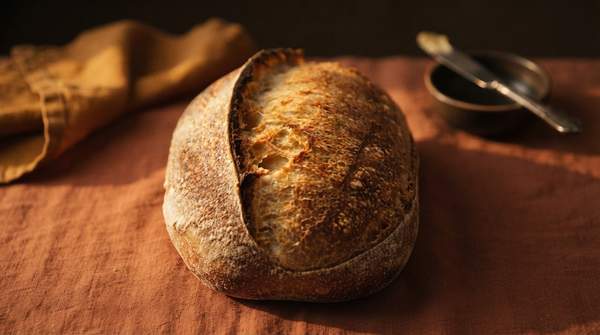
Here's the short answer to every "why is my sourdough sour?" question: the tang in your bread comes from two acids made by bacteria, not from the yeast. Yeasts give you the rise. Lactic acid bacteria—many of them Lactobacillus species—give you the flavor, and they don't all flavor the same way. Some strains churn out mostly lactic acid, which tastes mild and yogurty. Others produce acetic acid alongside it, which is the sharp, vinegary note that grabs you at the back of the tongue. Which of those acids dominates depends on things you control: temperature, feeding rhythm, and flour.
The Sourdough Symphony: Microbes and Flavor
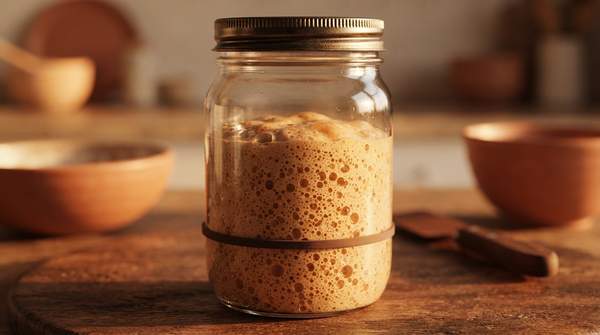
A sourdough starter isn't an ingredient. It's an ecosystem—flour and water teeming with a microbial community that researchers are still mapping. And here's the part I find genuinely exciting: that community isn't fixed. A review of sourdough microbiome research notes that the number and type of microbes in a dough depends not just on the native flora of the baker's environment and hands, but also on the choice of flour, when and how often the starter is fed, the type of cereal used, and the leavening and maintenance temperatures. Every one of those is a dial you can turn, which is why two bakers following the same recipe can end up with wildly different bread.
Yeast and Lactic Acid Bacteria: The Core Players
The division of labor in a starter is surprisingly clean. Yeasts are the main leavening agents—they generate carbon dioxide as a metabolic by-product, and that gas is what puffs your loaf up. The bacteria, meanwhile, are your flavor department. They produce organic acids as their metabolic by-products, driving the starter's acidity and influencing volatile aroma compounds. Fermentation itself is a collaboration between the two: a functioning starter runs on both homofermentative and heterofermentative lactic acid bacteria, and their combined output of acetic and lactic acids is what makes the product sour in the first place. So when your bread tastes flat, it's usually a bacteria story. When it doesn't rise, look to the yeast.
Flavor Architects: Lactic Acid vs. Acetic Acid
Now for the acids themselves, because this is where flavor actually happens. Lactic acid delivers a yoghurt-like flavor—soft, round, gentle. Acetic acid is the vinegar molecule, full stop, and it brings a sharper, more insistent note. As one microbiome review puts it, some microbial communities yield a yoghurt-like flavor from lactic acid while others produce that sharper vinegary note with acetic acid, and together the two acids create sourdough's tangy characteristic. But the acids aren't the whole picture. Lactic acid bacteria and yeast also churn out aroma precursors like free amino acids, which convert into aldehydes and alcohols—the molecules behind the toasty, fruity, subtle complexity that separates good sourdough from a merely sour loaf.
Homofermentative vs. Heterofermentative LAB: A Flavor Divide
Here's the mental model that changed how I think about starters. Lactic acid bacteria come in two functional camps. Homofermentative LAB—think Lactobacillus plantarum—convert sugars called hexoses almost entirely into lactic acid, at rates above 85 percent. Efficient, single-minded, mild. Heterofermentative LAB—like Lactobacillus brevis, Weissella confusa, or Leuconostoc mesenteroides, all documented in sourdough—split hexoses into a combination of lactic acid, acetic acid or ethanol, and carbon dioxide. They can also make both acids from pentose sugars. And some, like Fructilactobacillus sanfranciscensis, get especially good at acetic acid: when fructose is available, they use it as an electron acceptor and redirect their metabolism toward acetate production. More fructose, more vinegar.
Sourdough Flavor Control Framework
Put it all together and you get a framework you can actually use. The logic runs in a straight line: the type of bacteria that dominates determines which acids get made; the acids determine the flavor; and your choices about temperature, feeding, and flour shape which bacteria thrive. Research on fermentation conditions confirms that the acetic-to-lactic acid ratio is influenced by both the starter culture and the fermentation temperature, and that varying temperature and fermentation time changes the flavor and texture of the bread.
| Element | What it produces | Flavor result | Your lever |
|---|---|---|---|
| Yeasts (e.g., Saccharomyces cerevisiae) | Carbon dioxide; also volatile aroma compounds | Rise, plus background aroma | Indirect—keep the ecosystem healthy |
| Homofermentative LAB (e.g., L. plantarum) | Over 85% of sugars become lactic acid | Mild, yogurt-like tang | Shift with temperature and feeding rhythm |
| Heterofermentative LAB (e.g., L. brevis, Fr. sanfranciscensis) | Lactic acid plus acetic acid and CO2 | Sharper, vinegary tang | Shift with temperature, feeding, flour |
How to read it: when conditions favor the homofermentative side, lactic acid dominates and the bread leans mild and yogurty. When heterofermentative LAB gain the upper hand—or when Fr. sanfranciscensis gets plenty of fructose—acetic acid climbs and the loaf turns sharper and more vinegary. The framework is predictive, not absolute: these are living populations, and a starter's community also depends on your hands, your kitchen, and where in the house the jar sits, as researchers with the citizen-science sourdough project have found.
Flour Type and Feeding: Shaping the Population
Two more levers, both easier than they sound. First, flour. The type of cereal you feed your starter changes the nutrients available, which shifts the microbial community and its acid output—whole-grain flours bring different sugars and minerals than refined ones, so the same starter can behave differently on rye versus white. Second, feeding. When and how often you refresh the starter is one of the factors research links directly to the dough's microbiota, and longer stretches between feedings give bacteria more time to accumulate their acids before the next refresh dilutes them. A starter fed on a tight schedule and kept at a steady temperature will trend differently than one left longer between feeds. You don't need to memorize rules—just change one variable at a time and watch what the jar does.
Steering Your Sourdough's Flavor
Home bakers can intentionally guide their sourdough's flavor profile by adjusting fermentation temperature, feeding frequency, and flour type to favor specific lactic acid bacteria and their metabolic outputs. That's the whole game: you're not making flavor directly, you're choosing which microbes get to work. Pick one variable—move the starter somewhere warmer or cooler, feed it more or less often, swap the flour—and hold everything else steady. The measurable indicator is a noticeable shift in the bread's tanginess, from mild and yogurt-like to sharp and vinegary, corresponding to your change in fermentation conditions. Taste, adjust, repeat. Your starter will tell you what you steered it toward.