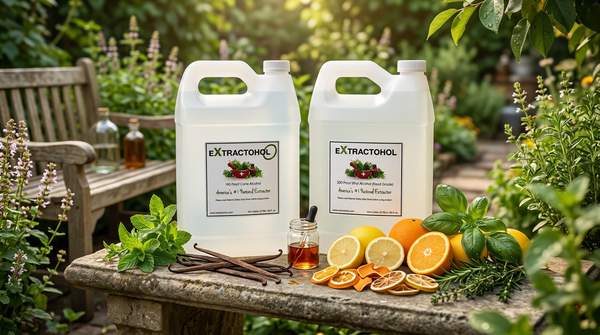
A bottle of high-proof grain alcohol from the liquor store may already be familiar to someone making herbal tinctures. It is accessible in many locations, comes with a recognizable proof statement, and may have worked well in previous batches. But when a recipe calls for a particular ethanol concentration or ingredient source, it is worth comparing what the liquor-store shelf offers with a supplier specializing in extraction alcohol.
Extractohol sells high-proof food-grade ethyl alcohol directly to people making herbal extracts, oils, tinctures, and concentrates. Its selection includes 200-proof grain alcohol and 190-proof organic sugar cane alcohol, providing alternatives for makers whose purchasing requirements extend beyond finding the strongest bottle available locally.
Start With What the Recipe Actually Requires
The first comparison is between the alcohol specifications, not the stores selling them. A tincture developed around 190-proof ethanol has a different starting requirement from a process that specifically calls for anhydrous, 200-proof alcohol.
Retail grain spirits are available at different strengths depending on the product and location. Everclear, a familiar example, is commonly associated with high-proof grain alcohol, including 151-proof and 190-proof versions.
Extractohol offers two clearly identified concentrations. Its 200-proof grain alcohol is anhydrous ethanol, while Extractohol-O 190 Proof Organic Sugar Cane Alcohol contains certified organic sugar cane alcohol and has a nominal composition of 95% ethanol and 5% water.
These differences affect which product matches a particular recipe. A maker who has successfully used 190-proof alcohol should not assume that switching to 200 proof will automatically improve the extract, because water content can influence which botanical compounds enter the solvent.
What Makes Extractohol a Different Purchasing Option?
Both liquor-store spirits and food-grade extraction alcohol can contain ethanol suitable for certain botanical preparations. The advantage of buying from a specialized supplier is the opportunity to select an alcohol product around the requirements of the extraction method.
Extractohol's 200-proof product is listed as United States Pharmacopeia (USP) food-grade ethyl alcohol. That gives makers an identifiable specification when their process calls for high-proof grain ethanol without water as a significant component.
Extractohol-O provides a different reason to consider the brand. Its 190-proof formulation contains certified organic sugar cane alcohol, making the ingredient source part of the purchasing choice.
The comparison becomes particularly relevant when an herbal maker wants to move beyond an unspecified retail substitute. Instead of identifying the alcohol only by the bottle originally purchased, the recipe can refer to a particular product, proof, and agricultural source.
Compare the Options Side by Side
| Purchasing consideration | Liquor-store grain alcohol | Extractohol |
|---|---|---|
| Proof | Depends on the spirit and local availability | 190-proof and 200-proof options |
| Ingredient source | Depends on the individual product | Grain alcohol or organic sugar cane alcohol |
| Product selection | Retail beverage selection | Food-grade ethanol products for extraction applications |
| Purchase format | Depends on the retailer | One-gallon and five-gallon containers |
| Buying conditions | Applicable beverage-alcohol laws and retail availability | Online ordering, age verification, and applicable shipping restrictions |
A comparison like this is more useful than treating high proof as the only definition of quality. The buyer can consider the recipe, ingredient preferences, purchasing quantities, and legal availability together.
The presence of an organic option also deserves precise treatment. Extractohol-O contains certified organic sugar cane alcohol, but that does not mean Extractohol's separate 200-proof grain formulation carries the same organic attribute.
When 200-Proof Grain Alcohol Makes Sense
Anhydrous ethanol is relevant to extraction methods that specify little or no water in the starting solvent. That can be a meaningful requirement when the maker is controlling the solvent composition for a particular botanical process.
Extractohol 200 Proof supplies that starting concentration in a food-grade grain alcohol product. A maker following a method designed around anhydrous ethanol can select the stated specification directly rather than trying to find an equivalent product on a liquor-store shelf.
There is another distinction between the starting alcohol and the solvent used during extraction. A formula may call for measured water to be incorporated into anhydrous ethanol, creating a different concentration for the intended process.
That means 200 proof is a formulation option rather than a universal recommendation. The value of Extractohol's product lies in providing a defined starting ingredient for methods that actually require it.
When Extractohol-O Deserves Consideration
Other makers are less concerned with starting from anhydrous ethanol and more interested in the agricultural source of their alcohol. For a recipe developed around 190-proof sugar cane ethanol, Extractohol-O supplies both the stated concentration and an ingredient with certified organic sourcing.
That can be relevant to a botanical maker who identifies ingredient origins as part of product development. The alcohol is one component of the preparation, but its source may be as deliberate a choice as the herbs selected for extraction.
Extractohol-O is available in one-gallon and five-gallon quantities. A maker can therefore retain the selected formulation while purchasing a volume appropriate to an individual project or recurring work.
Organic contents should still be described accurately. Using Extractohol-O does not automatically make a finished tincture or extract certified organic, because finished-product certification involves requirements beyond the alcohol ingredient.
Consider the Full Purchase, Not Just the Price Tag
A familiar liquor-store bottle may be convenient when the required spirit is legally available nearby. Extractohol's online ordering route is different, offering dedicated product listings and purchasing quantities suited to extraction work.
Price comparisons should reflect the actual products and quantities being considered. A smaller retail bottle, a one-gallon ethanol container, and a five-gallon purchase are not interchangeable units, even before shipping is considered.
Extractohol ships high-proof alcohol under hazardous-materials requirements. Its listings identify the relevant handling arrangements, and orders are subject to age verification and applicable local, state, and federal laws.
These conditions belong in a realistic comparison. Buying from a specialized supplier does not eliminate alcohol regulations or shipping costs, but it gives customers published product and ordering information to evaluate before purchasing.
A Liquor-Store Bottle May Still Be the Right Choice
There is no need to dismiss beverage-grade grain alcohol if it genuinely meets a recipe's requirements. For an occasional tincture made with a legally available spirit of the specified concentration, that purchase may be entirely reasonable.
A different decision arises when the method requires 200-proof ethanol, the maker prefers certified organic sugar cane ingredients, or a defined product specification is important to their work. Those are concrete reasons to consider Extractohol rather than arguments based on supposed defects in every retail spirit.
The point is to make a better-matched purchase. A maker can retain a method that works while changing the supplier when the new product offers an ingredient specification or purchasing format that better fits the preparation.
Frequently Asked Questions
Is Extractohol the same as Everclear?
Both Extractohol and Everclear are associated with high-proof ethanol, but their product ranges and purchasing channels differ. Extractohol specializes in food-grade alcohol for extraction applications and offers 190-proof organic sugar cane alcohol alongside 200-proof grain ethanol.
Is 190-proof grain alcohol suitable for herbal tinctures?
Many herbal tincture methods use 190-proof ethanol, but suitability depends on the recipe and intended preparation. Extractohol offers a 190-proof food-grade sugar cane option for methods specifying that concentration and ingredient source.
Why would someone buy Extractohol 200 Proof instead of liquor-store alcohol?
A method requiring anhydrous ethanol may call for a product beyond the proof available at a local liquor store. Extractohol supplies 200-proof USP food-grade grain alcohol for established extraction methods that specify that starting concentration.
Is Extractohol-O certified organic?
Extractohol-O 190 Proof Organic Sugar Cane Alcohol contains certified organic sugar cane alcohol. The ingredient claim does not automatically establish organic certification for any finished herbal product made with Extractohol-O.
Can Extractohol be ordered online?
Yes. Extractohol offers one-gallon and five-gallon containers through its official online store. Customers must be at least 21, and purchasing and delivery are subject to applicable laws and shipping requirements.
Compare the Alcohol, Then Choose the Supplier
Liquor-store grain alcohol can be a familiar starting point for herbal makers, but a specialized ethanol product may better match a particular extraction method or ingredient preference. Extractohol offers 200-proof USP food-grade grain alcohol and 190-proof organic sugar cane alcohol in dedicated purchasing quantities. Compare Extractohol’s 190-proof and 200-proof alcohol products against your recipe's requirements and select the option that belongs in your next preparation.