Koji fermentation is the work of a single mold, Aspergillus oryzae, whose enzymes dismantle the starches and proteins in cooked grains and soybeans and reassemble them as flavor. As the fungus propagates through steamed rice, barley, or soybeans, its amylase enzymes convert starch into simple sugars while its proteases and peptidases break proteins down into amino acids, including glutamate, the compound responsible for umami. That dual transformation is the foundation of miso, soy sauce, sake, mirin, vinegar, shochu, amazake, and Japanese pickles. Understanding which enzymes act on which substrates, and how the mold is cultivated, explains why these foods taste the way they do.
Aspergillus Oryzae: The Enzyme Powerhouse
The mold at the center of this process has been employed for koji production in the Orient for more than two millennia, according to a scientific review of A. oryzae as a biotechnological tool, and in Europe it has been used since the beginning of the previous century for enzyme production in brewing and baking. In Japanese cuisine, koji refers to soybeans and/or cooked grain that have been fermented with this mold, which was in turn named the "koji mold" to indicate its role in koji fermentation.
What makes the fungus so valuable is, in the review's words, its "potent ability to produce amylase and protease that allows it to decompose proteins and different starches into sugars and amino acids." In other words, A. oryzae is not a passive passenger in fermentation; it is a biochemical factory. Sake brewers capture this in their own shorthand: when they say "koji," they usually mean koji rice, but sometimes they mean "koji-kin," the mold in powder form, as Henry Sidel of Joto Sake explains. The context alone tells you which they mean.
The mold also secretes many salt-tolerant alkaline proteases, which makes it particularly stable in the high-sodium conditions required for miso and soy sauce production. The strain A. oryzae RIB40, for instance, appears to carry specific salt tolerance genes that regulate potassium transport. This tolerance is one reason the same organism can serve both low-salt applications like sake and heavily salted ones like soy sauce.
Enzymatic Transformation: Starch to Sweetness
The first half of koji's work is saccharification: converting complex carbohydrates into simpler sugars. The mold's amylase enzymes decompose the starches locked inside the grain, and as Sidel describes it for sake making, koji mold "produces enzymes that convert the starch into simple sugars." Those sugars are what a subsequent yeast or lactic fermentation consumes, and they also contribute directly to the sweetness of the finished food.
Starch is not the only barrier to flavor, though. The cell walls of plant materials like soybeans contain pectin, and A. oryzae produces pectinase, which drives starch hydrolysis by breaking down that pectin in the case of miso and soy sauce production. By opening the plant's cellular structure, the mold gives its other enzymes access to the starch and protein inside. The result is a substrate that has been physically and chemically opened up for the next stage of transformation.
Unlocking Umami: Protein to Amino Acids
The second half of koji's work is where umami is born. The mold's protease and peptidase enzymes decompose proteins and polypeptides into their building blocks. As the Wikipedia article on Aspergillus oryzae describes, "peptidases like leucine aminopeptidase cleave amino acids from proteins and polypeptides like glutamic acid, an amino acid that contributes to the characteristic umami flavor of these fermented soybean products."
Glutamate is the payoff. As Chris Lloyd writes for Clearspring, "One of the amino acids released by the action of koji is glutamate, which imparts an intensely satisfying and delicious savoury taste known as umami." Crucially, this savory depth does not arrive alone: "This, combined with the simple sugars also released, ensure that foods made using koji have a uniquely rounded and deep flavour." Sweetness and umami, produced side by side from the same grain, are what give koji-based foods their signature balance.
The Koji Transformation: From Grain to Umami
The table below traces the two biochemical pathways as a sequence of cause and effect: a substrate component, the enzyme A. oryzae supplies, the action it performs, the resulting compound, and the flavor that compound delivers. Reading it row by row shows how a raw grain becomes sweetness and savor.
| Substrate Component | Koji Enzyme | Enzymatic Action | Resulting Compound | Flavor Contribution |
|---|---|---|---|---|
| Starch in grains/legumes | Amylase | Decomposes starch (saccharification); pectinase opens cell walls to aid hydrolysis | Simple sugars | Sweetness; fermentable material for sake and amazake |
| Proteins in grains/legumes | Protease and peptidases (including leucine aminopeptidase) | Cleave amino acids from proteins and polypeptides | Amino acids, including glutamic acid (glutamate) | Umami; deep, rounded savory taste |
The two pathways operate simultaneously on the same substrate, which is why koji is more than the sum of its parts. In sake, the sugars feed the yeast while amino acids shape the final profile; in miso and soy sauce, glutamate and sugars together create the rounded depth Lloyd describes. The mold's salt-tolerant proteases ensure the protein pathway keeps working even in the brine of a soy sauce moromi.
Cultivating Koji: A Step-by-Step Guide
The Tokyo Foundation describes the practical process plainly: koji "is made by sprinkling tane koji over steamed rice, barley, or soybeans and cultivating the fungus under temperature conditions suitable for its growth. As the fungus propagates, enzymes break down the grains' starch and proteins into sugars and amino acids." The cultivation sequence follows from that description.
- Prepare the substrate. Steam the rice, barley, or soybeans so the grains are cooked but intact, giving the mold a moist, gelatinized medium it can penetrate.
- Inoculate with koji-kin. Sprinkle the seed koji, the powdered spores, evenly over the steamed grain.
- Incubate the fungus. Hold the inoculated grain in a warm, humid environment suitable for growth—around 30°C in typical practice—so the mold can propagate through the mass. The evidence specifies temperature conditions suitable for growth rather than a precise humidity figure.
- Manage and monitor. As Lloyd's account of Clearspring's mirin production shows, clumps of rice are broken up during cultivation so the koji develops uniformly rather than only on the surface.
- Read the result. The finished koji carries the characteristics imparted by its seed koji and grain: different koji are employed for different fermented foods, from soy sauce and miso to sweet rice wine, vinegar, shochu, amazake, and pickles.
Two boundaries are worth stating. This is a model of the process, not a recipe for making miso or soy sauce, which involve further salting, brining, and aging steps. And it concerns Aspergillus oryzae specifically; other molds such as Aspergillus sojae are outside its scope, as are industrial-scale production techniques.
Mastering Koji: A Foundation for Flavor
To successfully cultivate koji, focus on maintaining a warm, humid environment and monitoring the substrate for fungal growth and enzymatic activity. The mold does the biochemical work, but only if the cultivator supplies the conditions it needs and manages the grain so growth stays uniform.
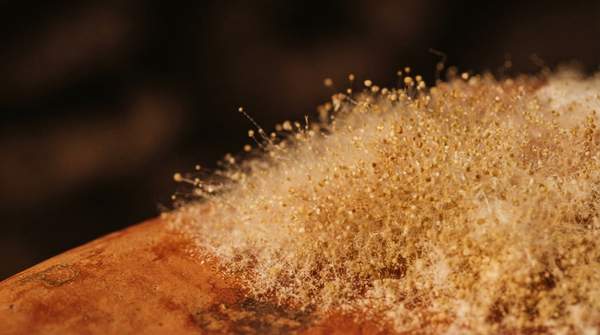
The measurable indicator of success is visible and olfactory: the appearance of a white, fuzzy mycelium on the substrate, followed by a sweet, fruity aroma, indicates successful koji growth and enzyme production. When those signs appear, the starch-to-sugar and protein-to-glutamate pathways described above are underway, and the grain is on its way to becoming the foundation of miso, soy sauce, or sake.