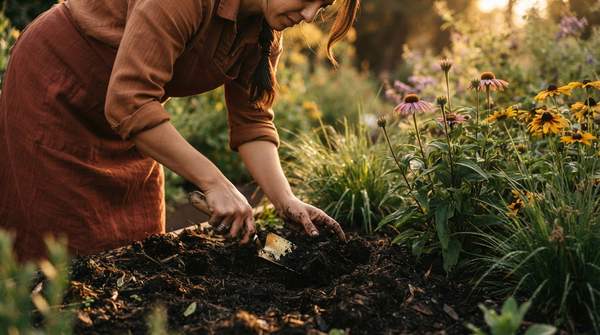
Sustainable gardening at home comes down to two foundational practices: feeding the soil with organic matter and filling the garden with a wide variety of plants, especially natives. The University of Maryland Extension recommends improving soil health by adding organic matter, disturbing the soil as little as possible, and making compost from yard waste and food scraps. It also urges gardeners to keep soils covered with a diversity of plants and to aim for at least 70% native plants in the landscape. Together, these actions build a garden that largely sustains itself, storing carbon, supporting pollinators, and needing fewer external inputs over time.
The Foundation: Building and Maintaining Healthy Soil
Healthy soil is the engine of a sustainable garden, and organic matter is its fuel. The University of Maryland Extension frames soil care as a climate solution as well as a horticultural one: improving soil health by adding organic matter helps store carbon, and perennial plantings minimize erosion. The mechanism is straightforward—organic matter enriches the soil, and covered, undisturbed soil keeps that carbon and those nutrients in place rather than letting them wash or blow away.
Composting is the most practical way a home gardener can build that organic matter. The Missouri Botanical Garden advises developing your own compost pile so you can return valuable plant material back to the soil in your yard, rather than sending plant-based garden waste to a landfill. Grass clippings, if collected, can go into the pile, and leaves should be composted or recycled through a neighborhood yard-waste program rather than discarded. A supported opinion essay on home gardens and sustainable development, published through the National Library of Medicine, notes that recycling these wastes not only reduces methane emissions from landfills but also improves a garden's soil and helps it store more carbon.
Disturbance matters as much as addition. PBS LearningMedia's sustainable gardening lesson lists tilling among the things not to do in a sustainable garden, alongside pesticides and commercial fertilizers. The reason is structural: undisturbed soil retains its natural layers and the microbial communities within them, so the organic matter you add stays protected and biologically active. For a home gardener, that means top-dressing beds with compost and mulching rather than digging it in aggressively.