Two of Italy's most iconic desserts answer a question most food guides skip: not just what a sweet is made of, but when Italians eat it. Panettone, the dome-shaped sweet bread from Milan, belongs to Christmas and New Year. Cassata Siciliana, a rich ricotta and marzipan cake from Sicily, belongs to Easter. Understanding these two desserts means understanding how Italy's sweets function as markers of time, tied to specific regions, seasons, and celebrations.
Italy's Sweet Calendar: Desserts as Markers of Time
Italian desserts do more than end a meal. As one food writer puts it, they "connect people to places and moments," and seasonal treats "mark the year," turning holidays into celebrations and meals into memories. This is the key to appreciating Italy's regional sweets: each one comes from a place, a family, and a tradition, and many are inseparable from a particular moment in the calendar.
That seasonal anchoring is why the same dessert can feel ordinary in July and essential in December. Panettone appearing on shop shelves is itself a signal that the Christmas season has arrived, while cassata's appearance in Sicilian homes points toward Easter. The dessert is not merely served at the holiday; in a real sense, it announces it. This framework—reading a pastry case like a calendar—is what separates Italy's festive baking tradition from an everyday dessert menu, and it is the lens through which the two desserts below are best understood.
Panettone: The Taste of Christmas in Milan
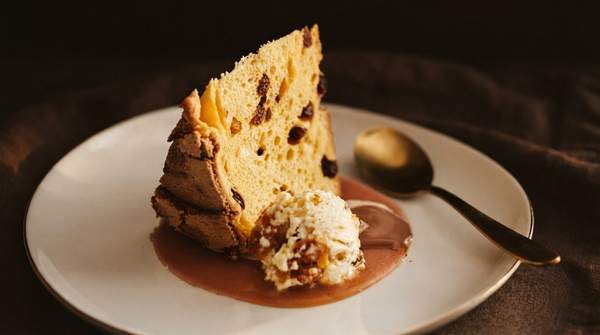
Panettone originates from the northern region of Lombardy, whose capital, Milan, is often regarded as its birthplace. It is a tall, dome-shaped loaf of sweet bread, dotted with raisins and candied orange, lemon zest, and citron. The result is a light, airy texture with bursts of candied fruit in every slice—a rich but delicate bread rather than a dense cake.
What defines panettone culturally is its season. It is traditionally enjoyed during Christmas and New Year, making it a seasonal staple of the Italian festive table rather than an everyday treat. Its association with the year-end holidays is so strong that its arrival in bakeries and homes is itself a marker of the season. For a reader encountering it for the first time, the essential facts are simple: a Milanese sweet bread, studded with candied fruit and raisins, and inseparable from Christmas.