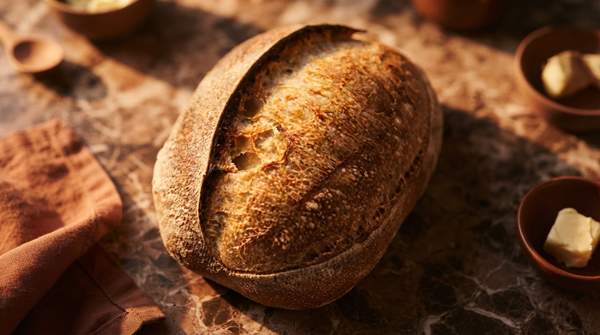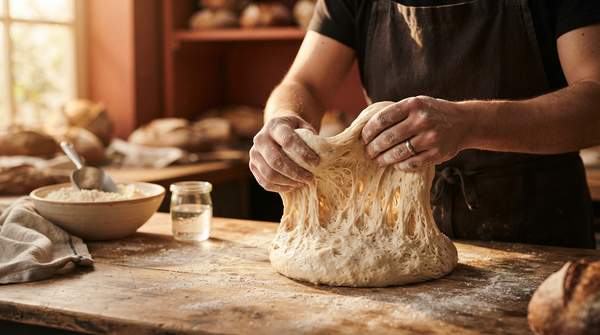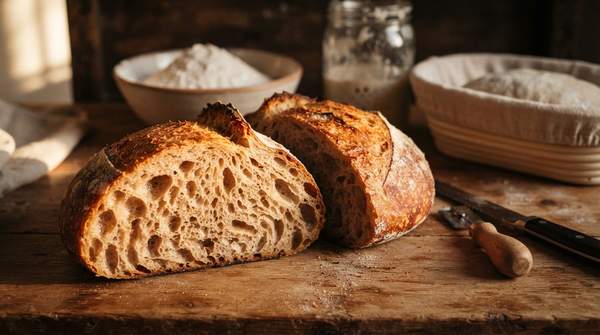
Every sourdough crumb you've ever sliced into is the visible record of a protein network you built—mostly without realizing it. Gluten isn't a single protein but a composite of two wheat proteins, glutenin and gliadin, that link into a stretchy web when water meets flour. The choices you control—flour protein, hydration percentage, and how you handle the dough—determine whether that web traps big, open pockets of gas or holds a tight, even interior. Here's the science, and a framework for aiming at the crumb you actually want.
The Science of Gluten: Gliadin, Glutenin, and Water
Start with the flour. Wheat flour contains two key proteins: glutenin and gliadin. On their own, they're just dormant proteins packed inside the starch. Nothing happens until water arrives. Hydration is the initial and crucial step for gluten development—once the flour is wet, these proteins interact and begin forming the elastic network bakers call gluten.
At the microscopic level, that network looks like an entangled web of strands, and it's this structure that gives dough its elasticity and strength. The network's most important job is gas retention: it traps the gas produced during fermentation, letting the dough rise and producing the airy interior characteristic of well-made bread. No intact network, no rise—gas simply escapes.
Flour choice matters here because protein content sets the ceiling. Higher-protein flours supply more raw material for gluten formation, which is why strong bread flours behave differently from softer ones. The proteins are the same two; there are simply more of them available to bond.