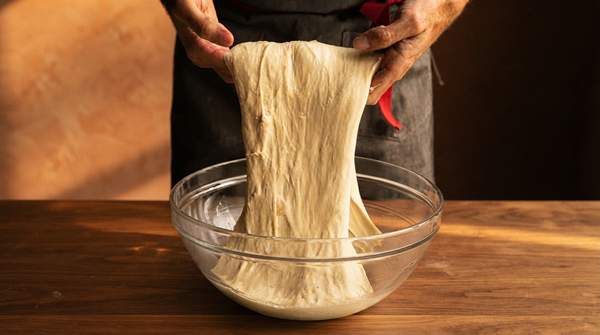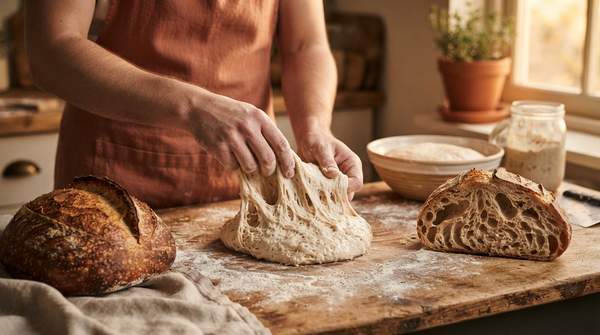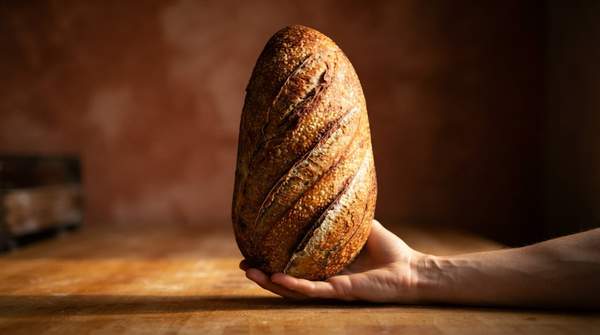
Every loaf of sourdough you'll ever bake runs on two tiny engines that were already sitting in your flour before you touched it. Amylase turns starch into sugars—fuel for rise, sweetness, and that golden Maillard crust. Protease breaks down gluten into smaller peptides and amino acids—softening the dough, adding flavor complexity, and, if it runs too long, ruining your structure. Understand those two processes and you can read your dough like a dashboard: crust color, crumb openness, and how slack it feels in your hands are all enzyme readouts.
The Hidden Power of Flour: Enzymes in Sourdough
Here's the part most bakers miss: the flour isn't inert. The moment water hits it, enzymatic reactions begin—Hendrik Kleinwächter, writing in The Sourdough Framework, describes this as the trigger of the whole fermentation process. The enzymes were there for the wheat's benefit, not yours. In the seed, amylase exists to convert starch into sugars so the germ can grow into a plant. Protease serves the plant's own protein turnover. We just hijack both.
Why are they concentrated where they are? Kleinwächter's explanation is practical: the enzymes sit largely in the outer parts of the hull, which is why adding whole flour to a white-flour dough meaningfully boosts enzymatic activity. This article stays with those flour-born enzymes in wheat- and rye-based sourdough—not the yeasts and bacteria themselves, and not other ferments like cheese or kombucha.