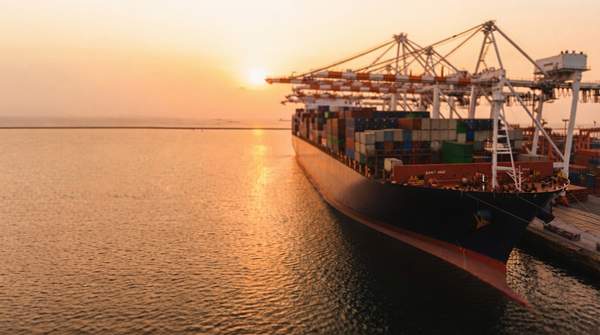
An industry group representing Canadian food producers has proposed a $700 million food logistics hub near Vancouver, a project designed to open vital new export channels as Canada works to expand trade with nations other than the United States. The pitch, reported by CoStar News on October 16, 2026, arrives amid American tariffs that are prompting Canadian producers to look elsewhere for growth.
New West Coast Hub Proposed to Diversify Canadian Food Exports
The proposal centers on a large-scale food logistics complex near Vancouver, with a reported price tag of $700 million. Its stated purpose is to support new export routes for Canadian producers at a moment when the country is deliberately broadening its trade relationships beyond its southern neighbor. CoStar's report links the plan directly to American tariffs, which have prompted trade with other nations.
One detail in the reporting underscores the current geography of Canadian food distribution: British Columbia food producers are now served by a 40-acre facility in Toronto, the Ontario Food Terminal. A West Coast hub would, in principle, shorten that distance for producers shipping toward Pacific markets, though the report does not detail the project's timeline, construction specifics, or precise site. The identity of the industry group behind the proposal has not been disclosed in the available reporting.
Strategic Imperative: Reducing Reliance on the U.S. Market
The hub proposal did not emerge in a vacuum. Farm Credit Canada's economics team, in an analysis published in September 2025 titled "The $12-billion trade shift," described a sector historically built around the U.S. relationship: in 2023, 59% of the Canadian agriculture and food sector's exports went south of the border, and 68% of its imports came from the United States. That integration, FCC noted, had long been mutually advantageous.
Recent U.S. tariffs, however, introduced what FCC called significant uncertainty and strain for Canadian exporters. The analysis set out to identify products and markets that FCC's economists consider prime diversification targets, with the explicit goal of informing how producers might limit trade reliance on the United States. A separate industry report summarized by Canadian Grocer, drawing on consulting firm MNP, similarly observed that amid trade disputes with the U.S., Canadian governments and industry are placing greater emphasis on expanding into non-U.S. markets.
Evidence of a Shifting Trade Landscape
The diversification strategy is not merely aspirational; the trade data already show movement. Government of Canada figures cited in the MNP report, as relayed by Canadian Grocer, show that exports to the U.S. declined by 3.8% year-over-year in 2025, while exports to non-U.S. markets increased by 11.2% over the same period. Those figures describe a recent trend rather than a long-term forecast, but they quantify the direction in which Canadian agri-food trade is already bending.
The same reporting points to a further dimension of the shift: MNP observed that while Canada excels at producing and exporting commodities, the country could create more value by processing and manufacturing more products at home. "One of the encouraging pieces coming out of this report is we're starting to see processors lean into diversification geographically," MacDonald said in the Canadian Grocer report. A logistics hub on the Pacific coast would give that geographic diversification a physical anchor.
Addressing Infrastructure Gaps for Global Competitiveness
FCC's analysis identified infrastructure as a binding constraint on any diversification effort, recommending investment in the transportation and logistics infrastructure needed to boost inter-provincial and global trade. FCC highlighted Canada's vast geography, noting that a product traversing Europe would still need to travel an additional 2,800 kilometers to equal the distance between Canada's eastern and western coasts.
Read against that recommendation, the Vancouver-area proposal is a concrete, if early, answer to a gap that Canada's own agricultural lender had already named. A $700 million facility positioned on the West Coast would place export-handling capacity closer to Pacific shipping routes, the natural corridor for the non-U.S. markets that both government policy and industry strategy are now targeting.
Connecting the Hub to Canada's Export Strategy
The proposal makes most sense when read as one tactical move inside a documented strategic shift. The framework below links the drivers identified in prior analysis, the trade performance already observed, and the specific solution now on the table.
| Subject | Dimension | Finding |
|---|---|---|
| Trade diversification push | Strategic driver | Amid trade disputes with the U.S., Canadian governments and industry are placing greater emphasis on expanding into non-U.S. markets, per an MNP report relayed by Canadian Grocer. |
| Need for infrastructure investment | Strategic driver | FCC's 2025 analysis recommends investing in transportation and logistics infrastructure to boost trade, citing Canada's continental distances. |
| Exports to the U.S. (2025) | Recent trade performance | Declined 3.8% year-over-year, according to Government of Canada figures cited by MNP. |
| Exports to non-U.S. markets (2025) | Recent trade performance | Increased 11.2% year-over-year, according to the same figures. |
| West Coast logistics hub | Proposed solution | A $700 million food logistics hub near Vancouver, proposed by an industry group for Canadian food producers, per CoStar News. |
| Hub's primary goal | Proposed solution | To support vital new export channels for Canadian producers as the country expands trade beyond the United States. |
The synthesis is straightforward: the strategic pressure (U.S. tariff uncertainty and heavy reliance on one market), the observed performance (a 3.8% decline to the U.S. against 11.2% growth elsewhere in 2025), and the identified remedy (logistics infrastructure investment) were all documented before this proposal surfaced. The hub is the first publicly reported infrastructure project of this scale to answer that combination directly on the West Coast.
Next Steps for Canada's Export Diversification
The Canadian agri-food industry and government should continue to pursue strategic investments in logistics infrastructure, such as the proposed West Coast hub, to capitalize on the observed shift in export markets and enhance global trade competitiveness. The proposal remains just that—a proposal—with no funding commitment, regulatory approval, or detailed project plan yet disclosed, and the industry group behind it unnamed in the reporting.
The measurable indicators to watch are further announcements regarding funding, regulatory approvals, or detailed project plans for the West Coast logistics hub, alongside continued tracking of Canadian agri-food export growth to non-U.S. markets. Whether the 11.2% growth in non-U.S. exports recorded for 2025 sustains into 2026 will show whether the diversification the hub is meant to serve is a durable trend or a one-year shift.
Sources
- News | Industry group for Canadian food producers pitches West Coast logistics hub to expand exports beyond US — CoStar
- The $12-billion trade shift: Canada’s opportunity to diversify food exports beyond the U.S. — FCC FAC
- New markets abroad, more value at home: Agri-food’s next opportunities — Canadian Grocer