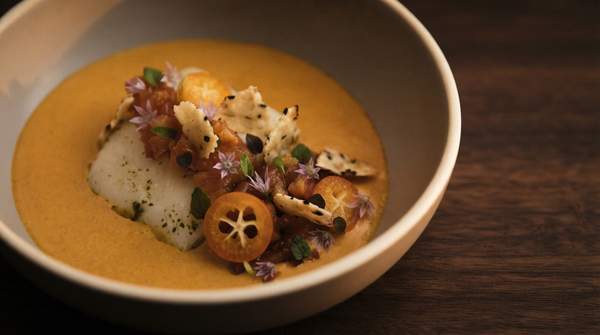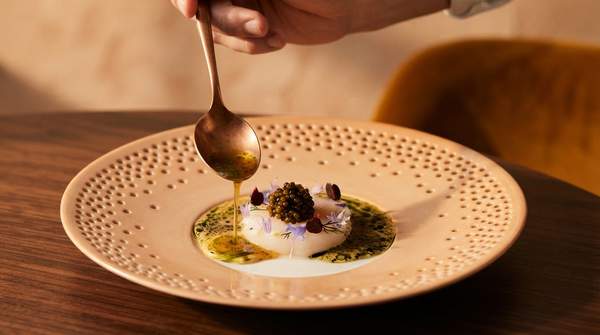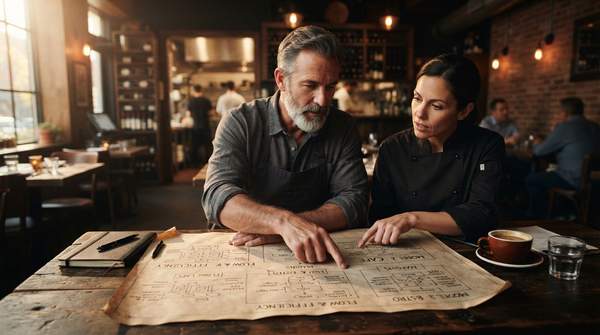
The most consequential decision an aspiring restaurateur makes is not the cuisine, the name, or the room. It is the concept — and a concept is not a vibe. As DoorDash's merchant blog explains, a restaurant concept is "the complete structural identity of your restaurant," spanning service model, menu style, price positioning, ambience, and target customer. Those five decisions, taken together, determine how you design, staff, and run the entire operation. Pick the wrong one and every downstream choice inherits the error.
What follows is a comparison of five distinct models — quick service, fast casual, casual dining, fine dining, and the delivery-only ghost kitchen — treated not as points on a price spectrum but as five different machines, each with its own labor logic, menu architecture, and customer contract.
Understanding Restaurant Concepts as Operational Blueprints
The industry's most persistent confusion, according to Peter Esmond writing for DoorDash's merchant blog, is the habit of mixing up concept, theme, and cuisine. The concept is the service and operational model: fast casual, ghost kitchen, fine dining. The theme sits on top as an aesthetic layer — the tiki bar, the industrial-chic room. Cuisine is simply the food category: Mexican, Mediterranean, Japanese.
Why does the distinction matter commercially? Because, as Esmond puts it, a Mexican fast casual spot and a Mexican fine dining restaurant share the same cuisine yet run as completely different concepts — different cost structures, different labor models, different customer expectations. "They may serve the same food, but behind the line, the two business models look nothing alike."
Or, in his sharper formulation: "The dining concept is the operational blueprint behind every business decision you make before a single customer walks in." That is the framing I want to hold through the rest of this comparison. A concept is a system of interlocking constraints, and the five models below are five different systems.
Restaurant Concept Comparison: Operational Blueprints
The table below compares the five models across a consistent set of dimensions: service model, menu style and complexity, price point, target audience, and key operational focus. It is drawn from CloudKitchens' format-by-format breakdown, INFI's guide to restaurant types, and the multi-brand restaurant research published in Sustainability. Use it as a first-pass screen: your budget, your market, and your own temperament will eliminate several rows before you ever draft a menu.
| Concept | Service Model | Menu Style & Complexity | Price Point | Target Audience | Key Operational Focus |
|---|---|---|---|---|---|
| QSR / Fast Food | Counter or drive-thru; minimal or no table service | Standardized, limited menu built for rapid preparation | $ | On-the-go, value- and speed-driven customers | Speed and throughput over dining-room experience |
| Fast Casual | Counter service with little to no table service | Higher-quality, often customizable options; frequently healthier choices | $ to $$ | Quality-conscious customers who still want speed | Combining speed with a better food experience |
| Casual Dining | Full table service in a relaxed setting | Diverse menu of familiar dishes, typically comfort food | $$ | Broad, family- and occasion-driven clientele | Comfortable sit-down experience without formality |
| Fine Dining | Full, highly attentive table service, often with wine pairing | Complex, curated menus; long service duration | $$$ to $$$$ | Guests seeking a luxurious, experience-led meal | Guest experience; service as a core product |
| Ghost Kitchen | Delivery or pickup only; no dining room | Streamlined menus optimized for delivery travel | $ to $$ | Online-ordering delivery customers | Preparation efficiency and delivery logistics; can host multiple brands from one kitchen |
Two structural observations fall out of the comparison. First, service intensity and price point move together: the more labor you put between the kitchen and the guest, the higher the check must be to carry it. Second, the ghost kitchen is the outlier on every axis — it removes the dining room entirely, which changes the cost base rather than just the price point.
Strategic Interplay: Choosing the Right Concept
Here is where most first-time operators go wrong. They choose a concept by taste — the food they want to cook — and then discover that the operational model attached to it does not match their capital, their market, or their appetite for managing people. INFI's guide to restaurant types is blunt on sequencing: selecting a concept needs to be one of the first decisions you make, because many of the choices that follow depend on the direction you choose.
Think of the four core components as a system of constraints. Menu complexity dictates kitchen labor and prep time; service model dictates front-of-house staffing and floor plan; price point dictates who walks in and how often; target audience dictates where you locate and how you market. Change one and the others move. A standardized, limited menu — the QSR approach — is what makes counter service viable at a $ price point. A complex, curated menu — the fine dining approach — is what justifies attentive full table service at $$$$.
The same logic explains why fast casual emerged as a category at all. It borrows the counter service of QSR, which keeps labor lean, but upgrades the ingredients and customization, which lifts the acceptable price into the $ to $$ band. It is a deliberate hybrid, engineered around a specific customer: one who wants speed without sacrificing food quality.
And the ghost kitchen applies the same interlock analysis to the cost side rather than the revenue side. Research on online restaurant operations published in Sustainability notes that the lack of dining spaces makes these restaurants economically attractive through ease of opening and low maintenance costs. Strip out the room, and the entire service-model column of the traditional blueprint collapses into a logistics problem.
Emerging and Hybrid Restaurant Models
The most interesting development of the past several years is not a new cuisine but a new unit of analysis: the multi-brand operator running several concepts out of one physical kitchen. The Sustainability study frames this as more than a cost play, arguing that multi-brand restaurants can significantly enhance environmental performance by reducing food waste and energy consumption, optimizing ingredient usage, consolidating menus, and grouping order deliveries. The same study is candid that the field is young — it describes itself as one of the first to analytically model multi-brand restaurant operations against other restaurant models, incorporating demand expansion from multi-brand adoption, delivery costs, franchise fees, and economies of scale.
The pattern is visible in established operators, too. RestaurantData Research points to Kimpton and Station Casinos running large collections of individually named food-and-beverage concepts, MTY Food Group managing a broad portfolio of scalable brands, and Lettuce Entertain You and Starr Restaurants combining original, repeated, and market-specific concepts. The lesson for a new operator: the multi-concept classification describes several different operating models, not one.
The pop-up is the other flexible format worth understanding, and CloudKitchens' typology places it at counter or stand service, sometimes with table service, at moderate-to-fast speed and $$ to $$$ pricing. Its defining trait is temporariness — a way to test a concept against a real market before signing a lease. The ghost kitchen, by contrast, is permanent infrastructure without a room. Both lower the barrier to entry; neither removes the need for a coherent operational blueprint underneath.
Making Your Strategic Restaurant Concept Choice
Aspiring restaurateurs should select a concept by thoroughly evaluating how its service model, menu, price point, and target audience integrate to form a viable operational blueprint that aligns with their specific business goals and market opportunities. The measurable indicator of a sound choice is a well-defined business plan that clearly articulates the chosen concept's integrated components and market fit.
Work the table in that spirit. If your capital is thin and your market skews toward delivery, the ghost kitchen's low-overhead model — and the multi-brand option of running several menus from one kitchen — deserves the first look. If what you actually want is a dining room full of regulars, casual dining's full-service, comfort-food model is the honest fit, and you should budget for the front-of-house labor it requires. If your ambition is a $$$$ check, accept that service is the product and staff accordingly.
What I would resist is choosing by décor. The theme is the surface layer; the concept is the machine. Test each candidate model against the five dimensions above, in writing, before you commit — because as the DoorDash merchant guidance makes clear, the concept sets the rules every other choice follows. Get the blueprint right, and the name, the room, and the menu become easy decisions rather than expensive corrections.