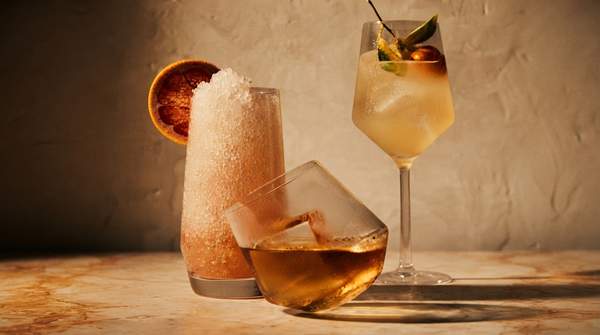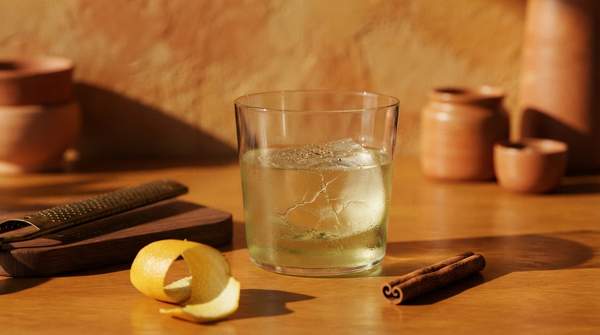
Clarifying a cocktail means trapping and removing the insoluble matter that makes a drink cloudy—and that matter, as the bartenders behind London's White Lyan explained in PUNCH, "can influence flavor, the visual appearance and the mouthfeel of your drink." Three techniques dominate modern practice: milk washing, agar-agar clarification, and centrifugation. Each rests on a different scientific principle—protein coagulation, gel entrapment, and physical separation—and each suits a different combination of ingredients, desired texture, and equipment. The short version: milk washing buys you a silky, shelf-stable punch with nothing more than a sieve; agar clarifies acidic juices in any kitchen; a centrifuge delivers speed and clarity for delicate flavors, if you can justify the hardware.
The Science of Clarity: Why Clarify Cocktails?
Fresh juices are full of tiny suspended particles of plant material, mostly pectin and cellulose, and those particles are what stand between a dull, opaque drink and a crystal-clear one. As Sidewinder Spirits' John Kinney puts it, clarification removes cloudiness, sediment, and unwanted compounds "while preserving—and often refining—its flavor," softening harsh edges into a silky or crisp mouthfeel. The goal is not merely cosmetic. Suspended solids also act as nucleation sites: any speck of pulp gives carbon dioxide molecules a place to grab hold and escape, which is why even strained juice quickly dulls a sparkling drink. Remove the solids, and carbonation lasts far longer.
There is also a preservation dividend. Historically, milk clarification was used as a preservation technique—PUNCH traces the curdled-milk method back some three centuries, and drinks historian David Wondrich notes that a strained, clarified punch "would (and will) keep almost indefinitely." For a home mixologist batching a large-format drink days ahead, that stability matters as much as the look.
Milk Washing: The Classic Method for Silky Smoothness
Milk washing is protein clarification. When milk is added to an acidic liquid, its proteins coagulate and curdle, separating from the mixture—and, as PUNCH's guide to drink science explains, those curds trap unwanted particles from the cocktail. Strain out the curds and you are left with a crystal-clear liquid. The method dates to the 1800s, when milk was added to acidic cocktails to make them "easier on the stomach"; the curdling was, in effect, a happy accident that made straining simple.
The sensory payoff is distinctive. Writing for the Tales of the Cocktail Foundation, Clair McLafferty reports that chilled clarified punch becomes "silky and unctuous enough to close a meal," with its taste equally altered by that signature smoothness. The White Lyan team's clarified Piña Colada—coconut cream curdled with pineapple juice, filtered into a clear syrup—kept "all of the richness and mouthfeel of the original" while emerging transparent. The trade-offs are time and yield: PUNCH cautions that the process can be time-consuming and often lowers your yield if several levels of filtration are required. The equipment, though, is nothing special—basic straining gear suffices, no laboratory required.
Agar-Agar Clarification: Trapping Impurities with Gels
Agar clarification works on a different principle: gel entrapment. Both agar-agar and gelatin consist of long chains of molecules that can be "detangled" in hot water; as the liquid cools, those chains re-form into a gel matrix that grabs onto the impurities and leaves behind crystal-clear juice. Chefs have long used eggs or gelatin to clarify stocks, and those work in alcohol too, but in his 2014 handbook Liquid Intelligence, Dave Arnold settled on agar as his preferred gel method.
Because the mechanism is purely physical—solids snagged in a cooling gel—agar is especially effective on juices clouded by plant material like pectin and cellulose. It is a genuinely domestic technique: you need a stove, a freezer, and a strainer, not lab equipment. Dante in New York uses the agar method to clarify the lime juice for its Brilliant Gimlet, a stirred drink named for the transparency that removing suspended solids makes possible. And because clarification strips out the nucleation sites that dull carbonation, agar-treated juice helps a sparkling highball keep its fizz far longer.
Centrifugation: High-Tech Clarity for Delicate Flavors
The centrifuge replaces chemistry with brute force. At Arnold's bar Existing Conditions, all clarification is done in centrifuges, which spin enzyme-treated juices at thousands of revolutions per minute to separate out the particles in a matter of minutes. Where milk washing asks hours of filtration and agar asks a freeze-thaw cycle, centrifugation compresses the whole process into minutes—making it the practical choice for bars clarifying large volumes daily, and for delicate ingredients where you want the solids gone without any curd or gel ever touching the flavor.
The catch is the machine itself. When Liquid Intelligence was published, Arnold was using an expensive, delicate laboratory centrifuge; in 2016 he introduced his own $800 machine, the Spinzall, a rugged, easy-to-use unit intended for bars and restaurants. For most home mixologists, that price is the decision: centrifugation is worth understanding as the professional benchmark, but the two low-tech methods cover nearly everything a home bar needs.
Comparative Guide to Cocktail Clarification Methods
The table below compares the three methods across the six factors that actually drive the choice: the underlying science, what each is best for, how it changes the drink, what you need, and how much effort it demands. Read it against your own goal—texture, clarity, or speed—and your equipment.
| Method | Scientific Principle | Best For | Flavor/Texture Impact | Equipment Needed | Relative Difficulty/Time |
|---|---|---|---|---|---|
| Milk washing | Milk proteins coagulate and curdle in acidic liquid, trapping unwanted particles that are then strained out | Acidic cocktails and punches; drinks you want to batch and keep almost indefinitely | Silky, unctuous mouthfeel; taste altered by the signature smoothness; crystal-clear result | Basic straining gear—sieve, cheesecloth, coffee filter; no lab equipment | Time-consuming; multiple filtration levels can lower yield |
| Agar-agar clarification | Long-chain molecules detangle in hot water and re-form a gel on cooling, physically trapping suspended solids like pectin and cellulose | Clarifying juices, especially acidic ones like lime; carbonated drinks where lasting sparkle matters | Crystal-clear juice; removes solids that cause cloudiness and dull carbonation | Stove, freezer, and strainer—fully domestic | Moderate; requires heating, cooling, and separation steps |
| Centrifugation | Physical separation: spinning at thousands of revolutions per minute forces particles out of suspension | High-volume bar production; delicate ingredients where speed and minimal intervention matter | Clarity in minutes without gels or curds contacting the liquid | A centrifuge—historically a delicate lab unit; Arnold's Spinzall costs $800 | Fastest process, but equipment cost puts it out of reach for most homes |
Read across the rows, a pattern emerges: the two methods that need no special equipment—milk and agar—pay for their accessibility with time and yield, while the machine pays for its speed with its price tag. None of the three is universally superior; each wins on a different axis.
Making Your Decision: Matching Method to Cocktail Goals
Start with the outcome you want. If your goal is texture—a punch that pours silky and unctuous, a Piña Colada that keeps its richness while turning transparent—milk washing is the method built for exactly that sensory transformation, and its near-indefinite shelf life makes it the natural choice for large-format batches. If your goal is clarity in a juice-forward drink, especially an acidic one like lime juice for a stirred gimlet, agar delivers crystal-clear results with nothing but kitchen equipment, and it doubles as the right call for carbonated drinks, since removing nucleation sites keeps the sparkle alive far longer.
Equipment is the second filter. PUNCH's own framing is useful here: there are advanced techniques that speed up clarification, "like the centrifuge," but there are plenty of ways to tackle it at home, "no laboratory required." If you do not own a centrifuge—and most home mixologists do not—you are choosing between curds and gel, which is really a choice between added richness and preserved character. Milk washing changes the drink, softening and texturing it; agar leaves the flavor closer to what you started with, minus the cloud. Reserve centrifugation for the day the Spinzall's speed and volume justify its $800 price.
Achieving Your Perfect Clarified Cocktail
Choose the cocktail clarification method that best aligns with your desired sensory outcome, the ingredients you are working with, and the equipment you have available. The evidence points to a simple mapping: milk washing for silky texture and shelf-stable punches, agar for clear acidic juices and lasting carbonation without special equipment, centrifugation for speed and volume when the hardware is already on the counter. Your measurable indicator is achieving the desired visual clarity and sensory outcome—whether that is the silky, unctuous mouthfeel Wondrich describes in a clarified punch, preserved delicate flavors in a transparent juice, or sustained carbonation in a sparkling drink—for the chosen cocktail. When the glass pours clear and the texture matches the intention, the method worked.
Sources
- How to Science Your Way to a Clarified Cocktail — PUNCH
- ACS
- The Science of Clarified Cocktails — SevenFifty Daily
- Clarify Your Cocktail… But Why? — PUNCH
- The Art of Cocktail Clarification in Modern Mixology - Sidewinder Spirits Co
- How Does Milk Clarify Cocktails? — Alcohol Professor
- The History and Science of Clarification - Tales of the Cocktail Foundation